The information on this page is for general educational purposes only.
Please consult your dentist for advice specific to your oral health.
Dental implants are a long-term solution for missing teeth, but the process involves surgery, a healing period of several months, and a higher upfront cost than alternatives like a dental bridge. Sufficient jawbone density is required, and not everyone qualifies without preparatory work first. This guide covers the main disadvantages so you can weigh them clearly before booking a consultation. It is for adults in Brampton and the GTA who are seriously considering implants and want to understand what the process involves before committing.
Key Takeaways
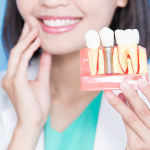
- Dental implants are surgically placed titanium screws that act as an artificial root in the jawbone.
- The entire implant process can take four to nine months from placement to the permanent crown.
- Implants typically cost more upfront than a dental bridge.
- Adequate jawbone density is required; bone grafting may be needed if bone loss has occurred.
- Not everyone qualifies — gum disease, smoking, and certain health conditions affect suitability.
- OHIP does not cover dental implants. The Canadian Dental Care Plan (CDCP), administered by Sun Life, excludes implants as well.
- Implants require the same daily care as natural teeth: brushing, flossing, and regular checkups.
- Complications such as infection or implant failure can occur, as with any surgical procedure.
What Is the Downside of Dental Implants?
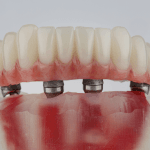
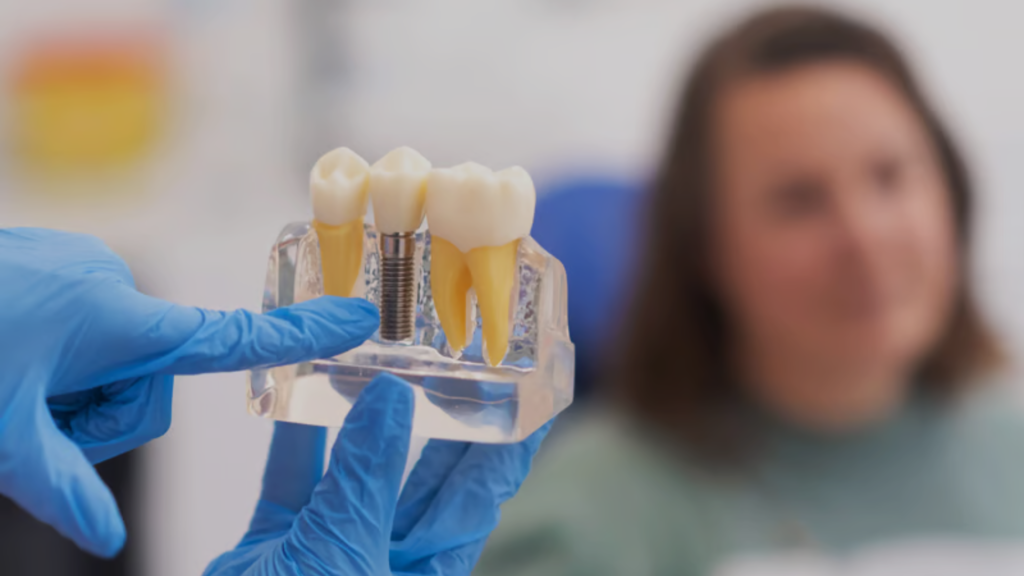
Dental implants replace missing teeth with a titanium screw anchored into the jawbone. They look and function like natural teeth and can last many years with proper care — but the process is not without trade-offs.
The main downsides are surgery and a multi-month healing period, a higher upfront cost, the need for sufficient jawbone density, possible complications, and ongoing maintenance. Each is covered below.
Surgery and Healing Time
Implants are surgically placed into the jawbone by a periodontist, oral surgeon, or trained dentist under local anesthetic.
After placement, osseointegration must occur — bone grows onto the implant surface to anchor it. This healing period varies by patient before the abutment and permanent crown can be placed.
The entire process, from implant placement to final restoration, takes several months depending on healing and whether preparatory treatment is needed.
For a detailed breakdown of the timeline, see our guide on how long dental implants take to heal.
Higher Upfront Cost
Dental implants typically cost more upfront than a dental bridge. The total price includes the implant, abutment, and permanent crown, along with the surgical procedure itself.
A bridge does not require surgery or osseointegration, which reduces both the cost and the treatment time.
For current pricing in Brampton, see our post on dental implants cost in Brampton.
You Need Enough Healthy Bone
Implant placement requires adequate bone volume in the jawbone. If bone loss has occurred — due to gum disease, tooth extraction without replacement, or injury — the jawbone may not have enough density to anchor the implant.
In those cases, a bone graft may be necessary before implant placement, adding time and cost to the process.
Ask at your consultation whether bone grafting is available in-house or would require a referral.
Not Everyone Is a Candidate
A dentist determines suitability at the initial assessment. Not all patients are candidates without additional preparation first.
Active gum disease must be resolved before an implant is placed. Smoking reduces blood flow to gum tissue and bone, which slows healing and can affect how well the implant integrates with the jawbone.
Certain medications and health conditions — particularly those affecting bone density or immune response — may also affect candidacy. Your dentist reviews your medical history before recommending the procedure.
Possible Complications
As with any oral surgery, complications can occur. Common risks include infection at the implant site, temporary nerve irritation, and implant failure if osseointegration does not complete.
Peri-implantitis — a bacterial infection around the implant similar to gum disease — is one of the leading causes of implant loss. It develops when the implant site is not cleaned consistently.
Your dentist explains all risks before you consent to the procedure.
Implants Still Need Daily Care
Implants are not natural teeth, but they require the same daily maintenance. Brush and floss around the implant and abutment just as you would with your natural teeth.
Regular dental checkups are essential. Your dentist checks the implant, surrounding bone, and gum tissue at each visit. Skipping appointments increases the risk of problems developing around the implant site.
When a Bridge May Suit You Better
A dental bridge replaces one or more missing teeth without surgery. It anchors to the adjacent teeth on either side of the gap and is completed in fewer appointments.
A bridge may be a better fit if you lack sufficient bone, prefer a shorter treatment timeline, or need a lower upfront cost.
For a full comparison, see our post on dental bridge vs implant.
Book an Implant Assessment at Delta Park Dental
If you are weighing your options, the right starting point is an in-person assessment. The team at Delta Park Dental can review your bone density, gum health, and medical history to determine whether you are a candidate.
Delta Park Dental — 215 Delta Park Blvd #104, Brampton, ON L6T 0H9 📞 +1 905-494-0094 | 📧 info@deltaparkdental.com Hours: Mon: 10:00 am – 4:00 pm | Tue–Sat: 10:00 am – 6:00 pm
Frequently Asked Questions
Are dental implants covered by OHIP?
No. OHIP does not cover dental implants. Ontario’s public health insurance covers medically necessary hospital and physician services — routine dental care is not included. The Canadian Dental Care Plan (CDCP), administered by Sun Life, also excludes dental implants. The CDCP covers preventative and restorative dental care only.
How do you get dental implants when you cannot afford them?
Contact Delta Park Dental to ask about payment plans and financing options. A written estimate from your dentist can be submitted to your insurer for potential coverage under a major restorative benefit. Phased treatment across separate appointments may also be an option.
How much does an average dental implant cost in Ontario?
For a detailed per-tooth breakdown of implant costs in the Brampton area, see our guide on dental implants cost in Brampton.
What is a dental implant and how does it replace a natural tooth?
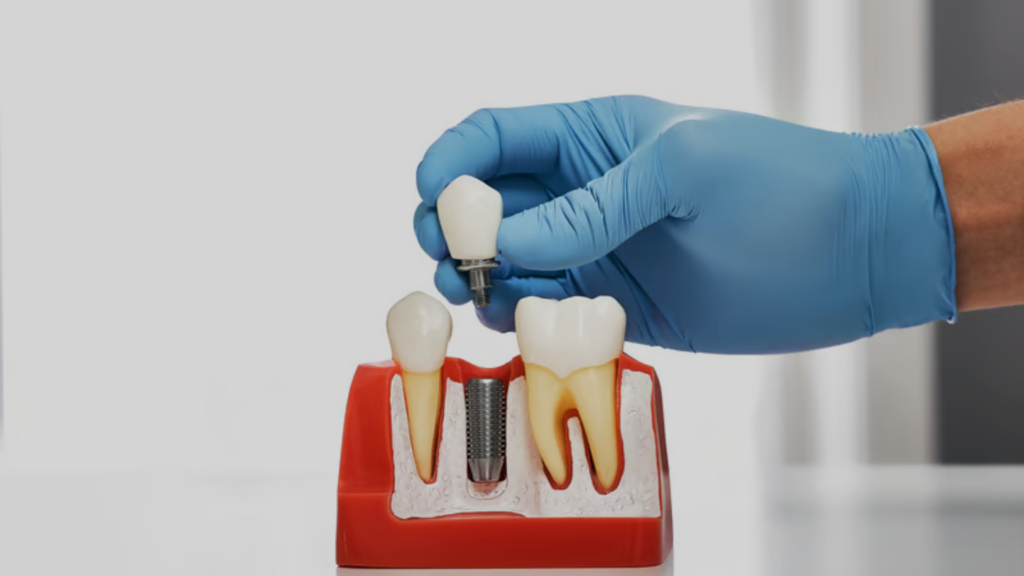
A dental implant is a titanium screw placed in the jawbone to replace a missing tooth root. A crown is attached above the gumline once healing is complete, restoring both function and appearance.
Can tooth decay affect a dental implant?
The implant cannot decay — it is titanium. However, surrounding gum tissue and adjacent teeth remain susceptible to infection. Peri-implantitis can develop if oral hygiene lapses at the implant site. Regular care at a dental clinic is essential.