
The information on this page is for general educational purposes only.
Please consult your dentist for advice specific to your oral health.
When comparing veneers vs teeth whitening, the answer depends on what is causing your discolouration. Professional teeth whitening removes surface stains and lightens natural teeth effectively — it is the right choice when teeth are structurally sound but discoloured. Veneers, by contrast, are thin porcelain or composite shells bonded to the front of teeth — the right choice when staining is intrinsic, enamel is worn, or the tooth has chips, cracks, or shape issues that bleaching cannot fix.
Choosing between whitening and veneers depends on specific dental needs and budget. Dentists may recommend whitening your natural teeth before placing veneers for color matching. This guide explains both treatments, what each delivers, and how to choose the right one for your smile.
At Delta Park Dental, veneers and professional teeth whitening are two of the most frequently requested cosmetic treatments from patients across Brampton. The guidance here reflects clinical experience — not a one size fits all recommendation.
What Causes Tooth Discolouration?
Understanding tooth discolouration is the first step to choosing the right treatment. Not all staining responds to whitening — and choosing the wrong approach wastes time and money.
• Extrinsic stains: Surface stains on the enamel from coffee, tea, red wine, certain foods, and smoking. These respond well to whitening treatment.
• Intrinsic stains: Discolouration within the tooth structure — from tetracycline antibiotics, fluorosis, trauma, or aging. Whitening has limited effect; veneers or other restorations are more appropriate.
• Enamel erosion: Aging causes thinning of tooth enamel, exposing the yellow dentin underneath. Bleaching cannot reverse structural enamel loss.
• Dental work: Crowns, fillings, bonding, and implants do not respond to bleaching agents. Existing restorations remain their original colour after whitening.
Tooth discoloration is also often caused by plaque buildup — which means a professional clean should precede any cosmetic treatment. Coffee, tea, and red wine are the most common dietary causes of surface staining, with smoking and chewing tobacco leading to deeper, more stubborn discolouration.
What Is Professional Teeth Whitening and How Does It Work?
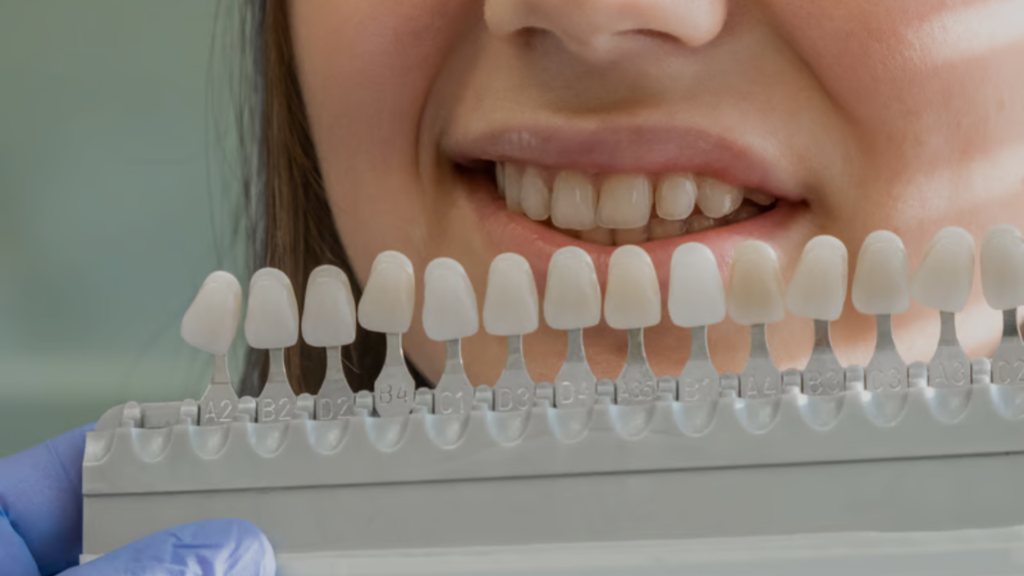
Teeth whitening — also called tooth bleaching — uses a bleaching agent to break apart the molecular bonds that create stain colour in the enamel. Whitening teeth with professional-strength products allows you to whiten your teeth by several shades. Professional teeth whitening uses far higher concentrations than home whitening products, which is why in-office results are faster and more predictable.
In-Office Whitening
In-office whitening uses professional-grade whitening gel — typically 15 to 43 percent hydrogen peroxide — applied after soft tissues and gums are protected. The bleaching gel breaks down compounds that stain teeth from coffee, tea, red wine, and tobacco. In-office whitening achieves results in 60 to 75 minutes and delivers whiter teeth — typically three to eight shades lighter — in a single office visit. Laser whitening activates the gel with a light source, usually taking 1 to 2 hours.
Home Teeth Whitening with Custom Trays
Custom trays from a dental professional minimise gum irritation during whitening by fitting precisely over teeth and gums. At-home kits prescribed by a dentist typically contain 10 to 22 percent carbamide peroxide. Applied nightly over a few weeks, results are comparable to in-office treatment but develop gradually. Home teeth whitening under dentist’s care is clinically supported for safety and effectiveness.
Over-the-Counter Whitening Products
Over-the-counter products — whitening strips, gels, and whitening toothpaste — are available without a dental visit. Whitening toothpastes can lighten teeth by one shade through mild abrasive action. Over-the-counter products often provide less effective results than professional teeth whitening due to lower bleaching agent concentrations and non-custom trays. They suit maintenance between professional treatments rather than primary whitening.
Note: Baking soda is a mild abrasive sometimes used to remove surface stains. It offers minimal whitening depth and should not replace professional whitening. It can be useful as a supplementary home teeth maintenance step.
What Are Veneers and When Are They the Right Choice?
Veneers are thin shells — porcelain or composite resin — bonded permanently to the front surface of teeth. They change the colour, shape, and appearance of a tooth in a way that whitening cannot. Veneers are a cosmetic treatment suited to patients with:
• Intrinsic staining that bleaching cannot lighten — for example tetracycline discolouration
• Chipped, cracked, or misshapen teeth where whitening addresses colour but not structure
• Gaps or minor spacing irregularities between teeth
• Enamel erosion where the surface layer has worn and cannot be restored with whitening
• Existing dental work — crowns, fillings, or bonding — in the smile zone that would not match whitened natural teeth
Veneers are permanent. Enamel is removed from the tooth surface during preparation — a small but irreversible step. Once veneers are placed, the treated teeth will always require a veneer or crown covering. This is a key clinical and lifestyle consideration before proceeding.
Veneers vs Teeth Whitening: Side-by-Side Comparison
| Feature | Professional Teeth Whitening | Veneers |
| What it treats | Surface stains on natural teeth | Intrinsic stains, chips, shape, gaps |
| Result | 3–8 shades lighter | Complete colour and shape change |
| Permanence | Not permanent — fades over time | Permanent — enamel is removed |
| Works on dental work? | No — fillings, crowns unchanged | Covers existing appearance |
| Time | 60–75 min (in-office) or few weeks (home) | 2 appointments over 1–2 weeks |
| Tooth sensitivity | Temporary — common during treatment | Possible post-placement sensitivity |
| Best for | Healthy teeth with extrinsic staining | Intrinsic stains, structural changes |
Is Teeth Whitening Safe?
Teeth whitening is safe when performed by dental professionals or using dentist-prescribed products. The key safety considerations are:
• Tooth sensitivity: Whitening procedures may cause temporary tooth sensitivity during or after treatment — this typically resolves within 24 to 48 hours. Patients with pre-existing tooth sensitivity should discuss this with their dental team before starting.
• Gum disease and oral health: Whitening is not suitable for patients with active gum disease or untreated decay. These must be treated first — bleaching over unhealthy teeth and gums can cause pain and worsen existing problems.
• Age: Teeth whitening is not recommended for children under 16, as tooth development is not complete and pulp chambers are larger.
• Existing restorations: Bleaching gel does not lighten crowns, fillings, bonding, or implants. Patients with visible dental work should understand that whitening may create a colour mismatch.
A bleaching treatment should only begin after a dental professional has assessed your oral health, examined your enamel, and confirmed that your teeth and gums are suitable candidates.
What Most Patients Get Wrong About Veneers vs Teeth Whitening
“Whitening will fix all my discolouration.”
Teeth whitening results depend entirely on the type of staining. Professional teeth whitening removes surface stains effectively — but intrinsic staining, enamel erosion, and discolouration from dental work are not resolved by bleaching. Patients who expect whitening to correct structural or deep discolouration are often disappointed. A dental professional will identify which type of tooth discolouration you have before recommending a treatment path.
“Veneers are just a cosmetic upgrade.”
Veneers are a cosmetic treatment — but the preparation involved is a permanent clinical procedure. Removing enamel to fit a veneer means the tooth is now reliant on that veneer or a crown for its outer surface indefinitely. Most people pursue veneers for appearance reasons, but the decision should be made with full understanding of the long-term commitment involved.
“Home whitening is just as good as the dentist’s office.”
Home teeth whitening products are effective for mild surface staining when used consistently. However, the higher concentration bleaching gel used in professional teeth whitening in a dentist’s office produces results that over-the-counter products cannot match for significant discolouration. For meaningful whitening results in a short timeframe, a dental visit is the more effective choice.
When Should You See a Dental Professional About Teeth Whitening or Veneers?
Book a consultation if:
• Home teeth whitening products have not improved your smile after consistent use
• Your discolouration is localised to one or two teeth — this may indicate decay or nerve damage rather than surface staining
• You have chips, cracks, or gaps alongside discolouration — whitening alone will not address these
• You experience tooth sensitivity during whitening that does not resolve within two days
• You have existing crowns, fillings, or bonding visible in your smile zone
• You are considering veneers and want to understand the preparation process before committing
Teeth whitening safe outcomes start with a professional assessment. Daily brushing and flossing maintain the enamel health needed for whitening to work effectively. A dentist’s office consultation takes the guesswork out of which treatment will actually work for your specific situation.
Why Brampton Patients Choose Delta Park Dental for Cosmetic Dental Treatments
We do not apply a one size fits all approach to cosmetic dentistry. Every patient’s enamel, staining type, existing dental work, and smile goals are different — and our treatment recommendations reflect that.
• In-office professional whitening with higher concentration bleaching gel for fast, significant results
• Custom whitening tray kits with professional bleaching agent for at-home use
• Veneer consultations that are honest about permanence, preparation, and realistic outcomes
• Cosmetic treatment planned around oral health — existing gum disease or decay is treated first
• CDCP and major insurance accepted for assessments and applicable treatments
Whether you want a brighter smile for an upcoming appointment or a permanent smile transformation, our Brampton dental team matches the right dental treatments to your specific situation — and delivers them with care.
Frequently Asked Questions: Veneers vs Teeth Whitening
Q1. What is the main difference between veneers vs teeth whitening?
Teeth whitening removes surface stains using a bleaching agent — it lightens natural teeth without altering their structure. Veneers are permanent shells bonded to the tooth front, changing colour and shape. Whitening suits extrinsic staining on healthy teeth. Veneers suit intrinsic stains, chips, enamel erosion, or cases where dental work in the smile zone would not colour-match whitened natural teeth.
Q2. How many shades can professional teeth whitening lighten?
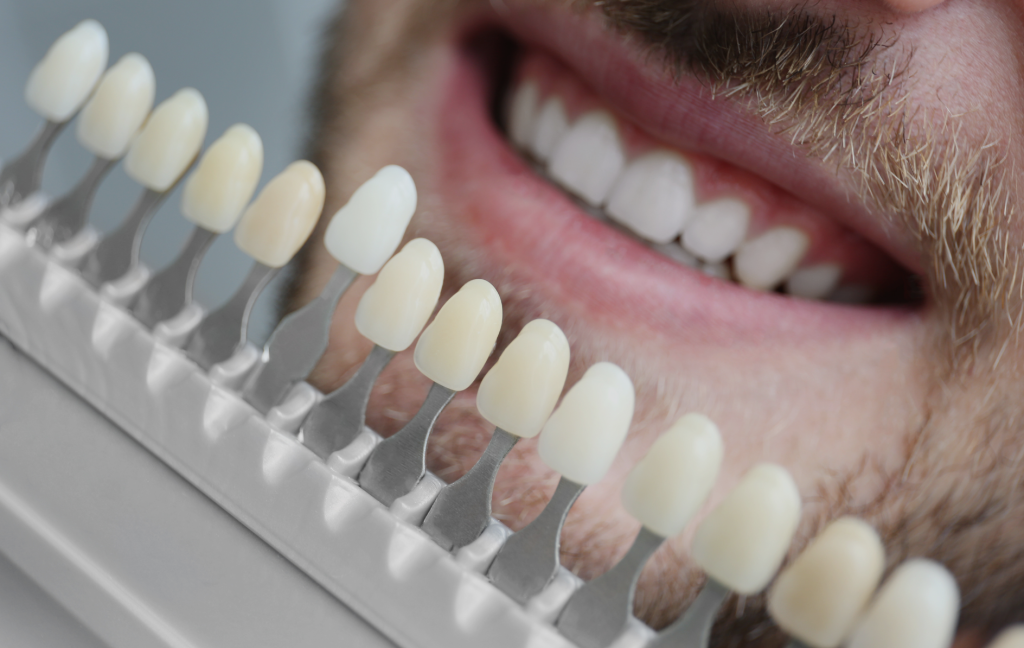
Professional teeth whitening can make teeth three to eight shades lighter, depending on the bleaching agent concentration and the type of staining. In-office whitening using higher concentration hydrogen peroxide achieves results in 60 to 75 minutes. Home kits with custom trays take a few weeks but produce comparable results. Over-the-counter products typically achieve one shade of improvement at most.
Q3. Are teeth whitening results permanent?
Teeth whitening results are not permanent. Whitening fades over time as certain foods — coffee, tea, red wine — and habits re-stain the enamel. Most patients maintain teeth whitening results for 6 to 24 months before a top-up treatment is needed. Avoiding staining foods and drinks, brushing consistently, and using a maintenance whitening tray between professional treatments extends results significantly.
Q4. Is professional teeth whitening safe for my oral health?
Teeth whitening is safe when supervised by a dental professional and performed on healthy teeth and gums. Active gum disease, untreated decay, or significant enamel erosion must be addressed before bleaching begins. Temporary tooth sensitivity during or after treatment is common and resolves quickly. Teeth whitening is not recommended for children under 16. A dental professional assessment confirms whether your oral health is suitable before treatment starts.
Q5. Can I use baking soda or home teeth products instead of professional whitening?
Baking soda removes light surface stains as a mild abrasive but does not lighten teeth meaningfully on its own. Home teeth whitening products with carbamide peroxide offer modest results for mild staining. For significant tooth discolouration, professional teeth whitening in a dentist’s office delivers results that home products cannot replicate. A dental professional can recommend the most appropriate approach based on your specific staining type.
Delta Park Dental | Brampton, Ontario | Family, Cosmetic & Emergency Dentistry
Every smile is different. For accurate information and personalized treatment options,
book a consultation with the team at Delta Park Dental.