



The information on this page is for general educational purposes only. Please consult your dentist for advice specific to your oral health.
A gap in your smile can affect more than looks. Missing teeth can change how you chew, how you speak properly, and how you feel each day. Many patients also worry about nearby teeth moving into the empty space. This can affect bite balance and long term oral health.
One common treatment option is a dental bridge. Patients often ask what it looks like, how it feels, and if it will match their natural smile. These are smart questions. Knowing the entire process can help you feel calm and ready.
At Delta Park Dental in Brampton, many patients ask about bridges as a trusted tooth replacement choice. This guide explains how a bridge looks, the different types, and how proper care helps it last.
What is a dental bridge for missing teeth?
A dental bridge is a fixed restoration used to replace missing teeth. It fills the gap left by a lost tooth or teeth. The bridge includes an artificial tooth in the center and support on each side.
That support often comes from abutment teeth, which are the natural teeth beside the gap. These teeth hold the bridge in place.
A bridge can help you:
- Chew food with ease
- Speak properly
- Keep other teeth from shifting
- Restore your smile
- Improve self esteem
For many patients, it is an effective solution after tooth loss.
What does a dental bridge look like with natural teeth and healthy teeth?
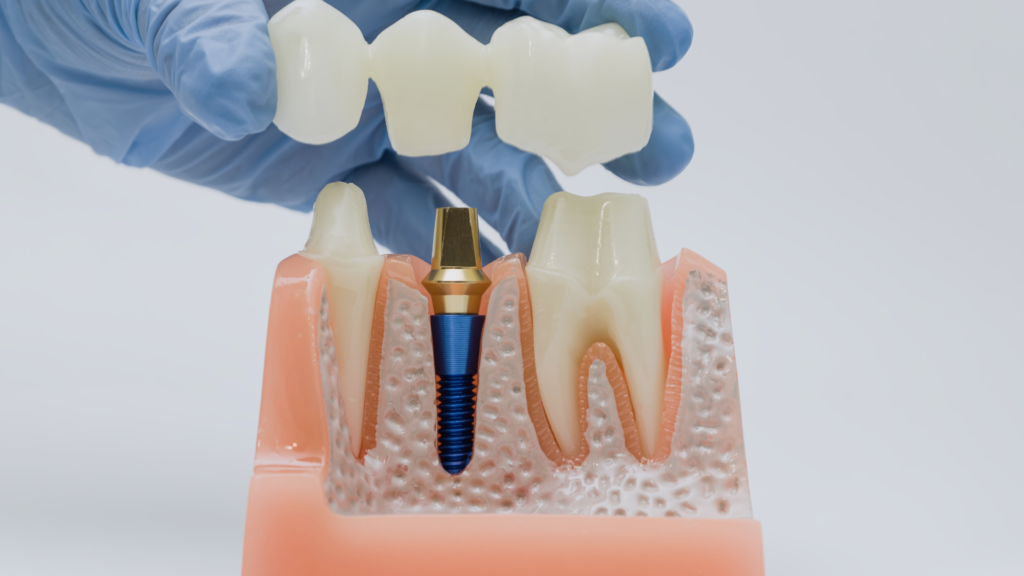
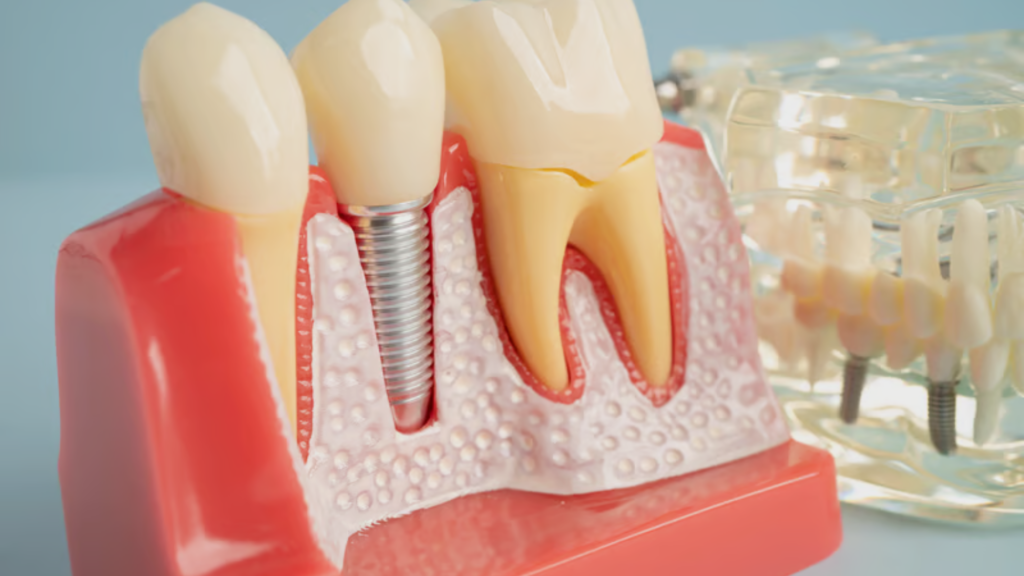
A bridge looks like one or more teeth joined together. The center part fills the gap. The side parts connect to support teeth or implants.
The dentist matches the shape and shade to your natural teeth. This helps the bridge blend with your smile. When done well, many people do not notice it.
The bridge also supports healthy teeth by helping stop movement of surrounding teeth and nearby teeth into the open space.
From the front, it looks like a normal row of teeth. From the side, it sits over the gums where the tooth is missing.
Different types of dental bridges
There are different types of dental bridges. The best one depends on the gap, gum health, and support teeth.
Traditional bridges
Traditional bridges are the most common type. They use dental crowns placed on the teeth on both sides of the gap. These crowns support the center tooth.
Traditional dental bridge
A traditional dental bridge works well when strong adjacent teeth exist on each side of the gap.
Cantilever bridges
Cantilever bridges use support from only one side. This may help in select cases when support exists on one side of the gap.
Maryland bridge
A Maryland bridge uses metal or ceramic wings bonded to the back of neighbouring teeth. It is often considered for front teeth.
Resin bonded bridges
Resin bonded bridges are another name often used for Maryland-style bridges.
Implant supported bridges and dental implants
Implant supported bridges use dental implants instead of natural teeth for support. This can help when several teeth are missing.
Dental bridge painful procedure and local anesthesia
Many patients ask if a dental bridge painful procedure should be expected.
The answer is that the dentist uses local anesthesia during treatment. This helps keep you comfortable while teeth are prepared.
After the visit, some people notice:
- Mild sensitivity
- Pressure when biting
- Gum soreness for a few weeks
These issues often improve as your mouth adjusts. If pain continues, the dentist may need to adjust the bite.
How the bridge involves adjacent teeth and one tooth gaps
The bridge involves using support from adjacent teeth or implants. If you lost one tooth, a bridge may fill that single gap.
The teeth beside the gap are shaped to hold crowns if a traditional bridge is used. These become the abutment teeth.
This support helps hold the bridge in place and restore chewing function.
Maryland bridge for front teeth and exposed teeth
A Maryland bridge is often discussed for front teeth because it may need less shaping of nearby teeth.
It uses wings attached behind the teeth. This means less of the visible tooth surface changes. It can be useful when the nearby teeth are healthy and there are no heavily exposed teeth areas or large fillings.
Your dentist will check if it suits your bite.
Bone loss dental implants and oral surgery
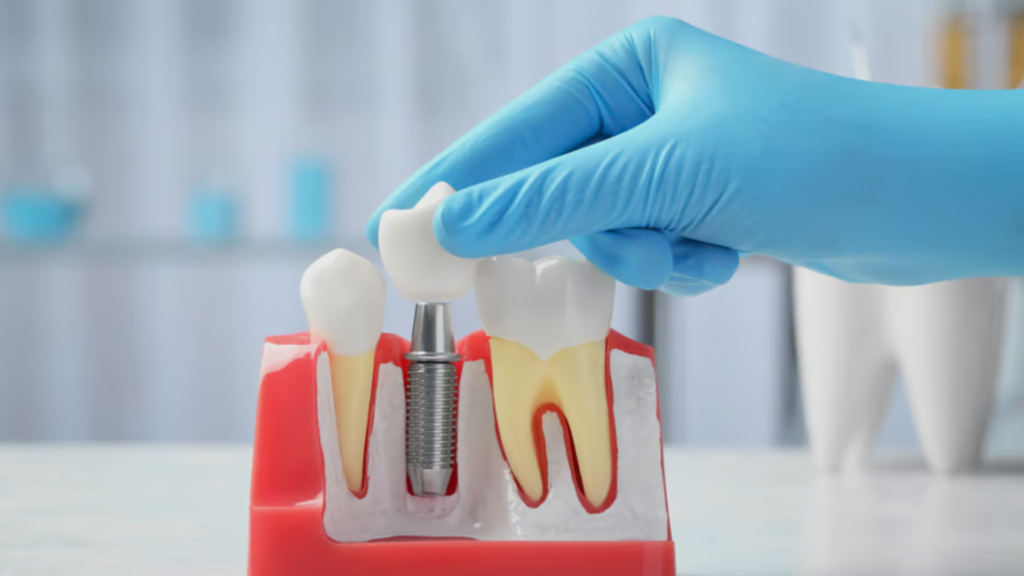
After tooth loss, the jaw can shrink over time. This is called bone loss.
A bridge restores the gap but does not replace the root in bone unless implants support it. Dental implants can help preserve bone in some cases, but they may involve oral surgery.
Some patients prefer a bridge because treatment can be faster and may avoid surgery. Others choose implants. Several factors guide the decision.
Your dentist can give an accurate estimate and explain options based on your health, gums, and goals.
Temporary bridge final bridge and dental lab process
The process often takes two visits.
First visit
The dentist examines your mouth, checks your gums, and reviews dental health. X-rays may be taken. If needed, issues like gum disease or a prior root canal are reviewed first.
Teeth are prepared if crowns are needed. Impressions or scans are then sent to a dental lab or dental laboratory.
You may receive a temporary bridge while the final one is made.
Second visit
The final bridge returns from the lab. The dentist checks fit, bite, and appearance. Once ready, it is permanently cemented in place as a permanent bridge.
Proper care oral health and professional cleanings
Good proper care helps a bridge last many years.
Daily care includes:
- Brush around the bridge and gums
- Clean under the bridge
- Floss around support teeth
- Avoid chewing hard objects
Regular exams and professional cleanings are also important.
This supports oral health, overall health, and the life of the bridge.
Why choose Delta Park Dental
At Delta Park Dental, patients receive clear guidance and personalized care. Many people feel unsure before treatment. The team explains each step in simple language.
Patients in Brampton choose this clinic because it offers:
- Detailed exams
- Personalized recommendations
- Care focused on comfort
- Modern planning tools
- Support through the entire process
The goal is to help patients restore their smile with confidence.
Is a dental bridge the right treatment option?
A bridge can be a strong treatment option if you have:
- One missing tooth
- Several missing teeth in one area
- Strong support teeth nearby
- A wish to avoid surgery
- Trouble chewing or speaking
Some people may need partial dentures or implants instead. Personal needs and personal preferences matter.
Your dentist will review the gap, gums, and remaining teeth before advising the best type of bridge.
FAQs
1. What does a dental bridge look like in the mouth?
It looks like natural teeth joined together. The center tooth fills the gap, and the sides attach to support teeth or implants.
2. Can a dental bridge replace one tooth?
Yes. A bridge can replace one tooth or more than one tooth depending on the gap.
3. How long does the dental bridge procedure take?
It often takes two visits over a few weeks. A temporary bridge may be used before the final bridge is placed.
4. Is a dental bridge painful after treatment?
Some patients feel mild sensitivity or soreness. This often improves quickly.
5. How do I care for a permanent bridge?
Brush daily, clean under the bridge, and attend regular checkups and professional cleanings.
Conclusion
A dental bridge can restore your smile, close a gap, and help you chew and speak with ease. It often looks natural and blends with nearby teeth. With proper care, it can serve you well for years.
If you are dealing with missing teeth and want answers about your options, book a consultation with Delta Park Dental in Brampton. A clear plan can help you replace the gap and protect your oral health.
Every smile is different. For accurate information and personalized treatment options, book a consultation with the team at Delta Park Dental.