



The information on this page is for general educational purposes only.
Please consult your dentist for advice specific to your oral health.
A tooth abscess is a pocket of pus caused by a bacterial infection inside or around a tooth — and it requires urgent dental treatment. Left untreated, the infection can spread to the jaw, neck, and in severe cases, become a life-threatening medical emergency.
If you are experiencing severe throbbing tooth pain, facial swelling, or fever, do not wait. Contact a dental professional as soon as possible. This guide explains the symptoms, causes, and exactly what to do if you suspect an abscessed tooth.
At Delta Park Dental, our team regularly treats dental abscess cases across Brampton and the GTA. The guidance below reflects real clinical experience managing tooth infections at every stage of severity.
DENTAL EMERGENCY: Difficulty breathing or swallowing alongside jaw or facial swelling indicates a life-threatening abscess. Call 911 or go to your nearest emergency room immediately.
What Is a Tooth Abscess and Why Is It Dangerous?
A dental abscess is a collection of pus that forms when bacteria invade the soft inner tissue of a tooth or the surrounding gum tissue. There are two primary types:
• Periapical abscess — forms at the tip of the tooth root when infection reaches the tooth’s pulp chamber through deep decay or a crack. This is the most common type.
• Periodontal abscess — develops in the gum tissue beside a tooth root, typically linked to gum disease or a deep periodontal pocket.
Once infection enters the dental pulp — the chamber containing blood vessels, connective tissue, and the tooth’s nerves — it has no natural exit. Pressure builds, pus accumulates, and the infection begins spreading into surrounding bone and tissue.
Untreated tooth abscesses can lead to sepsis. Infection can spread to the jaw and neck, and in extremely rare cases, cause bacterial meningitis or a parapharyngeal abscess that obstructs the airway. This is not a condition to manage with over-the-counter pain relief alone.
What Are the Symptoms of a Tooth Abscess?
Tooth abscesses cause sharp, throbbing pain in the affected area that often radiates to the ear or jaw. Recognising the signs early gives you the best chance of saving the tooth and avoiding serious complications.
Common symptoms include:
• Severe, throbbing toothache that does not stop — often worse when lying down
• Sensitivity to hot or cold temperatures that lingers after the source is removed
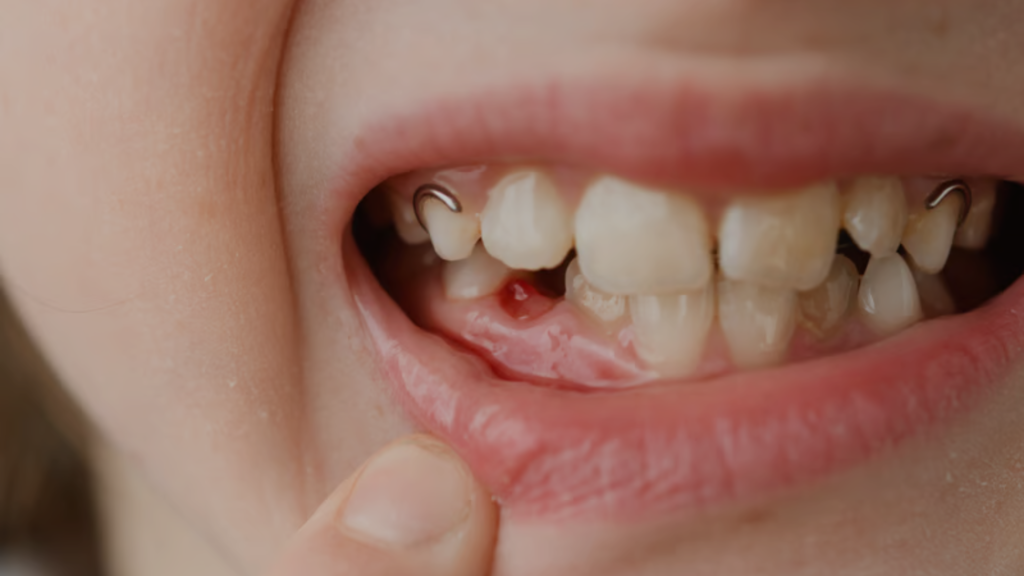
• A swollen bump on the gums resembling a pimple (this is the abscess itself)
• Swelling in the face or jaw — may indicate a spreading infection
• A fever of 38°C (100.4°F) or higher
• Swollen, tender lymph nodes under the jaw or in the neck
• A foul taste or smell in the mouth — often signals the abscess has ruptured
• Ear pain or pain radiating toward the neck
• Difficulty swallowing or breathing — this is a dental emergency requiring 911
When an abscess ruptures on its own, some pain may temporarily ease. This does not mean the infection is gone. The bacterial infection remains active and urgent treatment is still required.
What Causes a Tooth Abscess?
Bacteria can enter through deep cavities, cracks, or chips in a tooth. Once they reach the inner pulp — which has no immune defences of its own — infection takes hold quickly. The most common causes include:
• Tooth decay — bacteria erode tooth enamel and eventually reach the pulp chamber
• Cracked or chipped teeth — create direct pathways for bacteria to invade
• Gum disease — periodontal abscesses develop when bacteria pocket beneath the gum line
• Trauma to a tooth — even without visible damage, dead tissue inside can become infected
• Previous dental work — a failing dental crown or a damaged restored tooth can allow reinfection
Certain factors increase the risk. Dry mouth reduces the saliva that normally buffers bacteria. Weakened immune systems make it harder for the body to contain infections. A diet high in sugary foods accelerates tooth decay. Poor oral hygiene allows bacteria to accumulate unchecked.
Periapical Abscess vs Periodontal Abscess: Key Differences
| Feature | Periapical Abscess | Periodontal Abscess |
| Location | Tip of the tooth root | Beside the tooth in gum tissue |
| Primary Cause | Tooth decay or cracked tooth | Gum disease or deep pocketing |
| Pain Type | Deep, throbbing, constant | Localised, pressure-sensitive |
| Common Treatment | Root canal or extraction | Drainage, scaling, antibiotics |
| Risk if Untreated | Sepsis, jaw/neck spread | Bone loss, spreading infection |
What Does Tooth Abscess Treatment Involve?
A tooth abscess requires immediate professional dental attention. Treatment focuses on eliminating the infection, relieving pain, and preserving the tooth where possible. A tooth abscess treated promptly has a much better outcome than one left to progress.
Root Canal Treatment
Root canal treatment removes the infected pulp from inside the tooth. The pulp chamber is cleaned, disinfected, and sealed. A dental crown is typically placed over the restored tooth to protect it. This is the preferred option when the surrounding bone and tooth structure are still intact.
Tooth Extraction
When the affected tooth is too severely damaged to save, extraction is necessary. The infected tooth is removed and the site cleaned. Options to replace the tooth — including a dental implant or bridge — can be discussed once the infection has fully cleared.
Drainage and Antibiotics
Dental abscess treatment usually involves draining pus surgically through a small incision in the gum. Antibiotics may be prescribed if the infection has spread beyond the tooth itself. Antibiotics alone cannot resolve an abscess — the source of infection must be physically addressed.
For pain management, acetaminophen can provide temporary discomfort relief while you wait for your appointment. Do not apply heat to the face, as this can encourage the infection to spread.
What Most Patients Get Wrong About Tooth Abscesses
“The pain stopped, so it must be getting better.”
When an abscess ruptures, pressure drops and pain eases temporarily. The bacterial infection is still active. Many patients delay treatment at this point — and this is when spreading infection becomes most dangerous.
“Antibiotics will fix it on their own.”
Antibiotics reduce systemic infection and may be part of treatment, but they cannot drain a pocket of pus or remove infected pulp. Without physically treating the affected tooth, the abscess will return.
“I can wait until my next regular appointment.”
A dental abscess is not a routine dental issue. It is an active infection. See a dentist as soon as possible — same day if pain is severe, swelling is present, or fever has developed.

A Note for Brampton and GTA Patients
Delta Park Dental provides emergency dental services for patients across Brampton, Mississauga, Caledon, and the broader GTA. We understand that dental emergencies do not follow business hours or appointment schedules.
If you are experiencing signs of a tooth abscess — throbbing pain, facial swelling, fever, or a visible swollen bump on your gums — call our office directly. We prioritise same-day assessment for suspected infections. Patients with weakened immune systems, diabetes, or other systemic conditions should seek evaluation without delay, as infections can escalate more quickly in these cases.
Preventing abscesses long-term comes down to consistency: teeth cleanings at least twice a year, daily brushing with fluoride toothpaste, flossing to remove bacteria between teeth, a healthy diet low in sugary foods, and seeing a dentist regularly to catch decay and gum disease before they progress.
When Should You See a Dentist About a Possible Abscess?
Go to emergency immediately if you have: difficulty breathing, difficulty swallowing, high fever with facial swelling, or swelling spreading toward the eye or neck.
For all other symptoms — contact a dentist as soon as possible. Do not wait:
• Throbbing tooth pain lasting more than one to two days
• Any visible swelling in the gums, face, or jaw
• Fever alongside tooth or mouth pain
• Sensitivity that does not resolve after a few seconds
• A bad taste in your mouth that returns repeatedly
The longer a dental abscess goes without treatment, the greater the risk of the infection spreading to surrounding teeth, surrounding bone, and systemic tissue. Properly treated early, most patients recover fully with the tooth saved.
Why Patients in Brampton Trust Delta Park Dental for Dental Emergencies
When dental problems escalate, patients need a team that responds quickly and treats the cause — not just the symptoms. At Delta Park Dental, we provide:
• Same-day emergency appointments for suspected tooth infections
• On-site root canal treatment and tooth extraction services
• Clear, honest explanations of every treatment option
• CDCP and major insurance plan acceptance
• A calm, patient-first environment — especially important when you are already in pain
Our team has treated dental abscess cases at every level of severity. We do not recommend unnecessary procedures, and we will always discuss all options — including preservation versus extraction — before any treatment begins.

Frequently Asked Questions: Tooth Abscess
Q1. What is a tooth abscess and how serious is it?
A dental abscess is a pocket of pus caused by a bacterial infection in or around a tooth. It is a serious dental condition that requires urgent treatment. Left untreated, infection can spread to the jaw, neck, and surrounding tissue. In severe cases, untreated tooth abscesses can lead to sepsis — a life-threatening systemic infection. If you have facial swelling, high fever, or difficulty swallowing alongside tooth pain, seek emergency care immediately.
Q2. Can a tooth abscess go away on its own?
No. A dental abscess will not resolve without treatment. When an abscess ruptures, pain may ease temporarily — but the bacterial infection remains active and continues to spread. Seeing a dentist as soon as possible is essential. Delaying care allows the infection to penetrate surrounding bone and tissue, making treatment more complex and increasing the risk of serious complications.
Q3. What does root canal treatment involve for an abscessed tooth?
Root canal treatment removes the infected pulp from inside the tooth. The dentist cleans and disinfects the pulp chamber, then seals the tooth. A dental crown is usually placed on the restored tooth afterward for protection. Root canal treatment saves the natural tooth and eliminates the source of infection. It is the preferred option when the tooth structure remains sufficiently intact. Most patients find the procedure far less uncomfortable than the abscess pain that brought them in.
Q4. How do I know if my tooth infection has spread?
Signs that a spreading infection has moved beyond the tooth include: swelling in the face or jaw, fever above 38°C (100.4°F), swollen lymph nodes under the jaw, ear pain, and general fatigue or feeling unwell. Difficulty swallowing or breathing are warning signs of a parapharyngeal abscess — a dental emergency requiring immediate hospital care. If any of these symptoms are present, do not wait for a dental appointment. Go to emergency.
Q5. Does dry mouth increase the risk of a dental abscess?
Yes. Dry mouth reduces saliva flow, and saliva plays an important role in neutralising bacteria and washing debris from teeth and gums. People with chronic dry mouth — whether from medication, medical conditions, or mouth breathing — are at higher risk of tooth decay and gum disease, both of which are primary causes of dental abscesses. Staying hydrated, using saliva-stimulating products, and seeing a dentist regularly for teeth cleanings can meaningfully reduce this risk.
Delta Park Dental | Brampton, Ontario | Family, Cosmetic & Emergency Dentistry
Every smile is different. For accurate information and personalized treatment options,
book a consultation with the team at Delta Park Dental.