

The information on this page is for general educational purposes only.
Please consult your dentist for advice specific to your oral health.
Both Invisalign and traditional braces effectively straighten teeth — the right choice depends on your orthodontic needs, lifestyle, and how complex your case is. Invisalign clear aligners offer discretion and flexibility; traditional metal braces deliver precision for more involved corrections. If you are deciding between these options in Brampton, this guide gives you a clear, honest comparison so you can move forward with confidence.
Most patients are not just looking for straighter teeth — they want a result that lasts, which is why retainers and post-treatment care are part of every plan we discuss.
At Delta Park Dental, our dentists have guided hundreds of Brampton patients through orthodontic consultations. The insights in this guide reflect real clinical experience — not generic advice.
What Is the Difference Between Invisalign and Traditional Braces?
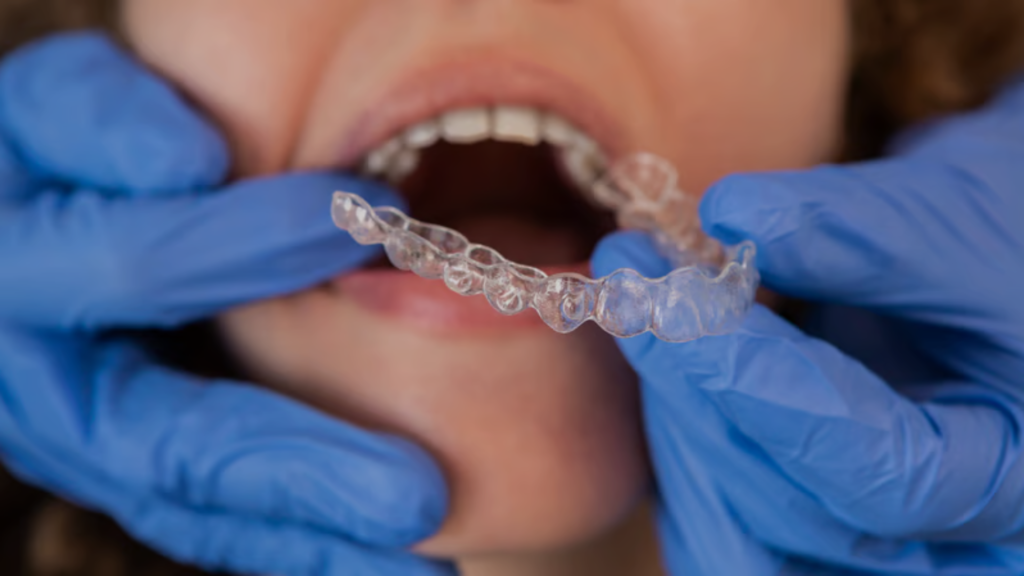
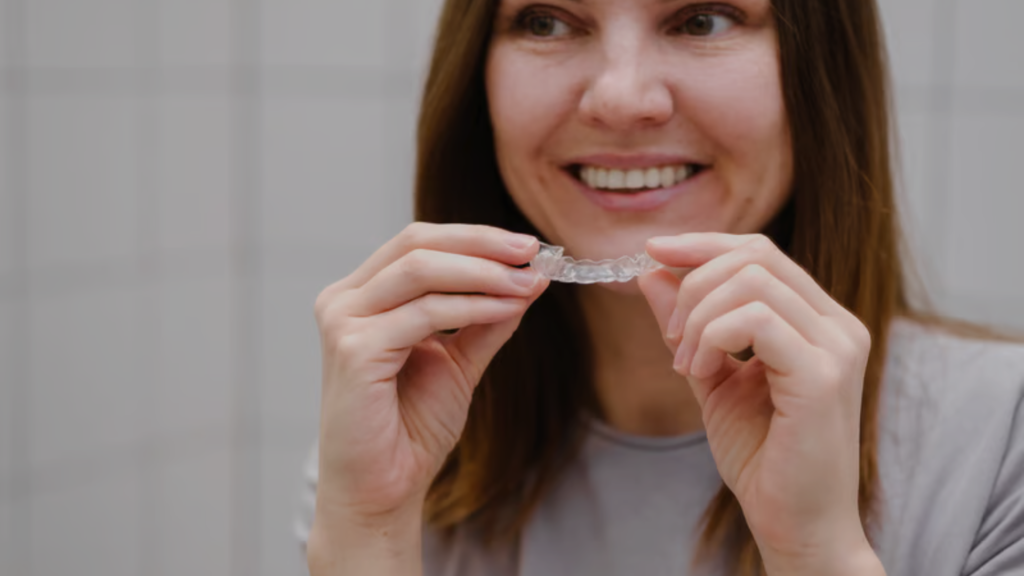
Invisalign uses a series of custom-made clear plastic aligners worn over your teeth, gradually shifting them into position. They are removable, nearly invisible, and replaced every one to two weeks.
Traditional braces use metal brackets bonded to teeth, connected by wires that apply steady pressure over time. They are fixed appliances — they stay on throughout treatment. Braces are often used in conjunction with other orthodontic appliances to help widen the palate or jaws, and to otherwise assist in shaping the teeth and jaws. Aside from correcting misaligned teeth, braces are also used to correct overbites, spacing and overcrowding problems
There are also clear braces and ceramic braces, which use tooth-coloured brackets for a more discreet look, and self-ligating braces, which reduce friction and require fewer adjustment appointments. Many patients visiting our clinic are surprised by how many orthodontic options exist beyond the standard metal-and-wire setup.

How Does Invisalign Treatment Work?
Invisalign treatment works through a sequence of precisely engineered clear aligners, each designed to move your teeth incrementally. The process typically looks like this:
• Digital scans of your teeth are taken — no messy impressions needed.
• A customised treatment plan is mapped using 3D imaging software.
• You wear each set of aligners for one to two weeks, then move to the next.
• Invisalign aligners must be worn 20 to 22 hours daily for results to stay on track.
• Periodic check-ins confirm your teeth are moving correctly.
The smooth plastic aligners reduce irritation compared to metal braces, and patients can enjoy most foods without restrictions during treatment — simply remove the aligners to eat.
Who Are Traditional Braces Best For?
Braces are more effective for complex orthodontic cases — severe crowding, significant bite issues, or teeth requiring substantial rotation. Because they are fixed appliances, they apply pressure continuously without any compliance requirement from the patient.
Traditional braces can cause oral irritation due to wires and brackets, and they are highly visible. However, for patients — especially children and teenagers — who may not consistently wear removable aligners, braces remove the compliance variable entirely. The duration of treatment with braces typically lasts 18 to 24 months. The length of treatment varies based on case complexity, but most patients are further along than they expected within the first few months.
Invisalign vs Braces: Quick Comparison
| Feature | Invisalign Clear Aligners | Traditional Braces |
| Appearance | Nearly invisible | Visible brackets & wires |
| Removable? | Yes — remove to eat & clean | No — fixed appliances |
| Treatment Time | 12–18 months (average) | 18–24 months (average) |
| Diet Restrictions | None | Avoid hard & sticky foods |
| Comfort | Smooth plastic; less irritation | Wires & brackets may irritate |
| Oral Hygiene | Easy — remove to brush & floss | Brush & floss around brackets |
| Best For | Mild–moderate cases; adults & teens | Severe crowding, bites, complex cases |
| Compliance | Must wear 20–22 hrs/day | No compliance needed |
Is Invisalign as Effective as Braces for Straightening Teeth?
For mild to moderate misalignment — crooked teeth, minor spacing issues, some bite corrections — Invisalign aligners deliver exceptional results comparable to braces. In our experience treating patients in Brampton, clear aligner technology has advanced significantly and can address a wider range of concerns than it could a decade ago. Invisible aligners have made it significantly easier for working adults to pursue orthodontic treatment without it affecting their professional appearance. A smile transformation does not happen overnight, but with the right treatment plan and consistent follow-through, the results are permanent and life-changing. For mild to moderate cases, Invisalign can be a cost-effective alternative to braces when you factor in fewer adjustment appointments and a shorter average treatment time
That said, braces remain the more reliable option for severe crowding, significant rotation, or complex bite problems. A proper consultation is the only way to determine which delivers the right outcome for your specific case.
Personalized care means your treatment plan is built around your teeth, your timeline, and your life — not a one-size-fits-all protocol.
What Most Patients Get Wrong About Invisalign vs Braces
“Invisalign only works for minor cases.”
Modern aligner systems can address more than patients expect. That said, a consultation is essential — assuming Invisalign will work without an assessment can lead to delays if your case requires braces.
“Braces always take longer.”
For complex cases, braces can actually deliver results within a similar timeframe — especially since they work continuously without relying on patient compliance.
“Ceramic braces are as invisible as Invisalign.”
Ceramic braces use tooth-coloured brackets for a discreet appearance, which helps — but they remain visible and can stain. Invisalign aligners are genuinely near-invisible during wear.
What Brampton Residents Should Consider When Choosing Orthodontic Care
Brampton’s population is diverse, and orthodontic needs differ across groups. Here is what we see most often:
• Working professionals favour Invisalign — discreet in meetings, fewer appointments to schedule.
• Parents of school-aged children often lean toward braces for more involved bite corrections.
• Seniors exploring alignment later in life are frequently good Invisalign candidates.
• New residents arriving from abroad are often unfamiliar with CDCP coverage or how Canadian dental insurance applies to orthodontic services — our team walks you through this at no extra cost.
Whatever your situation, the goal is the same: a straighter, healthier smile that fits your life. One of the most common orthodontic concerns we hear from new patients is not knowing where to start — a single consultation is usually all it takes to get clarity.”
When Should You See a Dentist About Orthodontic Treatment?
Book a consultation if you notice:
• Crowded, overlapping, or widely spaced teeth
• Jaw pain, clicking, or difficulty chewing
• Difficulty cleaning between teeth due to positioning
• A child’s adult teeth coming in crooked or out of position
• Ongoing self-consciousness about your smile
Delaying orthodontic care can worsen crowding, complicate oral hygiene, and limit your treatment options. Earlier assessment means more choices.
Why Choose Delta Park Dental for Orthodontic Services in Brampton?
Our team provides thorough, pressure-free consultations for patients at every stage of life. We assess your teeth, bite, and oral health before recommending anything — because the right treatment plan starts with an accurate picture of where you are today.
• Certified Invisalign provider with hands-on clear aligner experience
• Advanced digital imaging for precise diagnosis and treatment planning
• CDCP accepted along with most major insurance plans
• Flexible payment options to make orthodontic care accessible
• Family-friendly environment welcoming children through to seniors
We have helped patients across Brampton, Mississauga, and the GTA achieve their orthodontic goals — and we are ready to help you too.
Frequently Asked Questions: Invisalign vs Braces
Q1. Is Invisalign better than braces for adults?
For most adults with mild to moderate misalignment, Invisalign clear aligners are a strong choice — discreet, removable, and typically completed in 12 to 18 months. For more complex orthodontic needs, traditional braces may deliver better results. The only reliable answer comes from a consultation with an experienced Invisalign provider who can assess your specific case. At Delta Park Dental, we give you an honest recommendation — not a sales pitch.
Q2. How does Invisalign treatment work differently from dental braces?
Invisalign treatment works through a series of custom clear aligners, each worn for one to two weeks to gradually shift teeth. Dental braces use metal brackets and wires that apply continuous pressure, tightened during regular adjustment appointments. Both achieve orthodontic alignment — Invisalign through removable aligners you manage yourself, braces through fixed appliances adjusted by your dentist or orthodontist.
Q3. What is the braces cost vs Invisalign cost in Brampton?
Braces range from $3,000 to $7,500; Invisalign treatment costs range from $4,000 to $8,000. Insurance may cover up to $3,000 toward orthodontic care, and payment plans can begin as low as $99/month. At Delta Park Dental, we review your CDCP eligibility and insurance coverage during the consultation so you understand the full picture before committing to a treatment plan.
Q4. Are clear aligners suitable for children’s orthodontic care?
Clear aligners can work well for older children and responsible teenagers who will consistently wear them 20 to 22 hours per day. For younger children or cases involving significant bite correction, traditional braces are often more appropriate. We recommend an orthodontic assessment starting around age seven so the right timing and approach can be planned. Our Brampton team supports families through every stage of this process.
Q5. Do I need a consultation before starting orthodontic treatment?
Yes — always. A consultation allows your dentist to assess your teeth alignment, bite, spacing issues, and oral health before recommending Invisalign, braces, or ceramic braces. Skipping this step and assuming a treatment type will lead to delays or incorrect choices. At Delta Park Dental, our consultations are thorough and unhurried. We make sure you leave with a clear understanding of your options, expected treatment time, and what your new smile journey looks like.
Delta Park Dental | Brampton, Ontario | Family, Cosmetic & Emergency Dentistry
Every smile is different. For accurate information and personalized treatment options,
book a consultation with the team at Delta Park Dental.