



The information on this page is for general educational purposes only.
Please consult your dentist for advice specific to your oral health.
A full dental crown covers the entire tooth above the gum line; a partial crown — sometimes called an onlay or three-quarter crown — covers only a portion of the tooth’s chewing surface. Both restore a broken, decayed, or cracked tooth, but the right choice depends on how much natural tooth structure remains and where the damage is located.
If your dentist has suggested a crown and you are not sure which type applies to your situation, this guide explains the difference, the materials available, what the procedure involves, and how to make the right decision for your oral health.
At Delta Park Dental, we place full and partial dental crowns for patients across Brampton. The guidance below reflects real clinical experience — not a product guide. We match crown type and crown material to each individual case.
What Is the Difference Between a Partial Crown and a Full Crown?
Full Dental Crown
A full crown — the standard dental crown most people are familiar with — covers the entire visible surface of the tooth above the gum line. It encases the tooth completely, providing maximum protection against further fracture, decay, and wear. Full crowns are used when the tooth has lost significant structure or when root canal therapy has been completed. The crown replaces the outer layer of the tooth entirely, and can be made from various types of materials including metal, porcelain, ceramic, or resin.
Partial Crown
A partial crown — also called an onlay, three-quarter crown, or overlay — covers only part of the tooth’s chewing surface rather than encasing the entire structure. It sits in the mouth above the gums and bonds directly to remaining natural tooth structure. There is no artificial tooth replacement here — the root stays intact. A partial crown is appropriate when damage affects one or more cusps but enough healthy structure remains to avoid removing space for a full crown. It is a more conservative option in dentistry.
When Does a Dentist Suggest Each Option?
Tooth location significantly influences the choice between partial and full coverage, and several factors guide the decision. Most people receive full crowns because their damage is too extensive for a partial. A partial crown may be suggested — for example when fracture is limited to one cusp and bonding to the remaining structure is reliable. Your doctor will assess the extent of decay, position, bite load, and remaining tooth structure before recommending which option fits your case.
Partial Crown vs Full Crown: Key Differences
| Feature | Full Crown | Partial Crown (Onlay) |
| Coverage | Entire tooth above gum line | One or more cusps only |
| Tooth prep | More tooth removed | Conservative — less removal |
| Best for | Severely broken, decayed, or root canal-treated teeth | Partial damage; healthy structure remains |
| Materials | Porcelain, ceramic, metal, resin, gold | Porcelain, ceramic, gold, resin |
| Visits needed | Typically two appointments | Typically two appointments |
| Lifespan | 5 to 15+ years with proper care | 5 to 15+ years with proper care |
What Crown Materials Are Available and Which Is Best?
Crowns can be made from various types of materials — porcelain, metal, ceramic, resin, or a combination. In modern dentistry the right choice depends on the tooth position, bite load, aesthetics, and whether other teeth nearby affect the space available for the restoration.
Porcelain Crowns and Ceramic Crowns
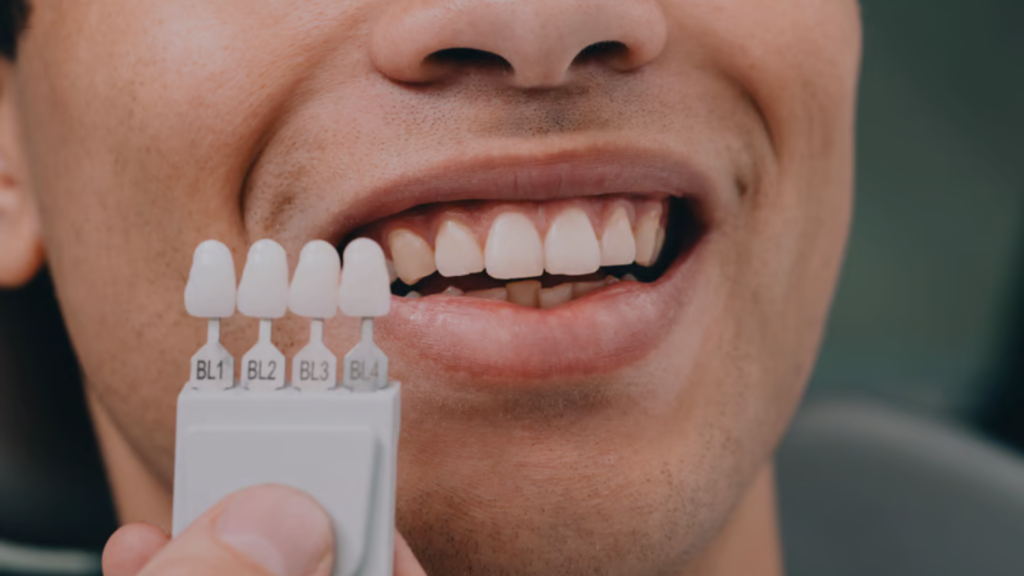
Porcelain crowns match the colour of natural teeth, making them the most popular choice for front teeth where appearance is the priority. All-ceramic crowns are ideal for patients with metal allergies and offer excellent aesthetics. Ceramic crowns are metal-free, mimic the translucency of natural enamel, and bond well to the tooth structure. However, ceramic can be more brittle under heavy chewing force than metal alternatives.
Porcelain Fused to Metal Crowns
Porcelain fused to metal crowns combine the aesthetics of porcelain with the strength of a metal substructure. They are durable and suitable for both front and back teeth. Over time, a dark line may appear at the gum line as it recedes slightly, revealing the metal layer beneath. PFM crowns remain a reliable choice for patients who want a natural look with greater structural support than all-ceramic.

Metal Crowns and Gold Crowns
Metal crowns are extremely durable and often used for back molars where bite force is highest and appearance is less of a priority. Gold crowns can last up to 20 years and metal crowns can last over 15 years — making them the most durable option for longevity. They require less removal of natural tooth structure than other crown types. Their metallic appearance limits them to back teeth in most cases.
Same Day Crowns and Resin Options
Same day crowns are milled in-office using CAD/CAM technology — a digital scan of the prepared tooth is used to produce a ceramic or resin crown within the same visit. This eliminates the need for a temporary crown and a second appointment. Resin and acrylic are also used for temporary crowns while the permanent crown is fabricated in the dental lab.
What Does the Dental Crown Procedure Involve?
The dental crown procedure typically requires two appointments — though same day crowns complete the process in one visit.
First Appointment — Preparation
At the first visit, the dentist prepares the tooth by removing decay and shaping it so the crown can fit over it correctly. For a broken tooth or weak tooth, any damaged material is cleared and the tooth built up if needed. An impression or digital scan is taken and sent to the dental lab. A temporary crown — made from acrylic or resin and secured with temporary dental cement — is placed to protect the tooth while the permanent crown is fabricated. Temporary crowns typically last 2 to 3 weeks and are not customised for individual fit.
Dental Lab Fabrication
The dental lab creates the custom crown from the chosen material — porcelain, metal, ceramic, or gold. Permanent crowns can take 2 to 3 weeks to create depending on the lab and material complexity. Lab craftsmanship significantly affects how well the crown fits, how natural it looks, and how long it lasts.
Second Appointment — Fitting the Final Crown
At the second appointment, the temporary crown is removed and the final crown is checked for shape, bite, and fit. Minor adjustments are made before the permanent dental crown is cemented in place. Most patients do not feel pain during the fitting, though some sensitivity around the gum is normal for a day or two. Once the crown is cemented, it functions like a natural tooth.
What Most Patients Get Wrong About Dental Crowns
“A crown means I don’t need to look after that tooth anymore.”
A crown protects the visible portion of a tooth — it does not seal the root or prevent decay at the margin where crown meets gum. Proper oral hygiene around a crowned tooth is as essential as on natural teeth. Brush along the gum line and floss around the crown daily. Neglecting this is the most common reason crowns fail before their expected lifespan.
“My temporary crown is good enough — I can wait.”
Temporary crowns are made from acrylic or resin and secured with temporary dental cement — they are designed to be replaced, not kept. Waiting too long for the second appointment risks the temporary coming loose, the prepared tooth shifting, or bacteria entering the preparation. Visit your dentist promptly at the scheduled second appointment to have the permanent dental crown fitted.
“Same day crowns are lower quality.”
Same day crowns made from high-quality ceramic or zirconia using CAD/CAM technology match the durability and appearance of lab-fabricated crowns in many cases. They are a clinically sound option — not a shortcut. The main difference is convenience: one appointment instead of two, and no temporary crown required.
What Brampton Patients Should Know About Crown Placement
Many patients visiting our Brampton practice are surprised to learn that the choice between a partial and full crown is determined by clinical assessment — not by patient preference alone. The extent of damage, the location of the tooth, what the bite load looks like, and whether root canal treatment has already been done all determine which option is appropriate.
For patients with front teeth requiring restoration, porcelain crowns and all-ceramic crowns are typically the best match for natural teeth in terms of colour and translucency. For back teeth that bear heavy chewing load — particularly molars — durability is prioritised, making metal crowns or porcelain fused to metal a better long-term choice for most people.
Dental crowns can last between 5 to 15 years with appropriate care. Patients who brush and floss consistently, avoid chewy foods that dislodge restorations, wear a night guard if they grind, and visit their dentist regularly extend the lifespan of their crown significantly beyond the average range. Proper oral hygiene is essential for maintaining the longevity of dental crowns regardless of material.
When Should You See a Dentist About a Crown?
Book an appointment if you:
• Have a broken tooth, cracked tooth, or a tooth that has lost a large filling
• Are experiencing pain or bite changes on a previously crowned tooth
• Notice your temporary crown has come loose or feels different
• Have been told you need root canal therapy and have not yet had a crown placed
• See a dark line forming at the gum line of an existing crown
• Have a damaged tooth you have been putting off having treated — the longer you wait, the more structure is lost, and the more complex the restoration becomes
Why Brampton Patients Choose Delta Park Dental for Crown Treatment
We discuss every crown option — partial and full, temporary and permanent, the full range of materials — before any tooth preparation begins. Our goal is to match the restoration to your clinical needs and your long-term oral health, not to recommend the same solution for every patient.
• Full and partial crowns placed using current dental techniques
• All crown materials available: porcelain, ceramic, porcelain fused to metal, gold, same day crowns
• Root canal treatment and crown placement coordinated in-house
• CDCP and major insurance plans accepted
• Clear explanation of crown procedure, materials, and expected lifespan before any work begins
Whether you need a single dental cap on a broken tooth or several crowns as part of a broader restoration plan, our Brampton team provides careful, informed care through every stage — from the first appointment through to final crown placement.
Frequently Asked Questions: Dental Crowns
Q1. What is the difference between a partial crown and a full dental crown?
A full dental crown covers the entire tooth above the gum line. A partial crown — an onlay or three-quarter crown — covers only part of the chewing surface. Full crowns suit teeth with extensive damage or after root canal treatment. Partial crowns are more conservative, preserving more natural tooth. Your dentist will assess the extent of damage before recommending which type is appropriate for your tooth.
Q2. How long does a permanent dental crown last?
A permanent dental crown typically lasts between 5 and 15 years, though many last 20 years or more with proper care. Gold crowns can last up to 20 years; porcelain crowns and ceramic crowns generally reach 10 to 15 years. Longevity depends on crown material, bite load, oral hygiene habits, and whether you grind. Consistent brushing, flossing around the crown, and regular dental check-ups all extend lifespan significantly.
Q3. What are the main types of dental crown materials?
Dental crowns are made from porcelain crowns, ceramic crowns, metal crowns, porcelain fused to metal, gold, and resin or acrylic for temporary crowns. All-ceramic crowns suit front teeth and patients with metal allergies. Metal crowns are the most durable for back teeth. Porcelain fused to metal balances aesthetics with strength. Same day crowns use ceramic or zirconia milled in-office. Your dentist will recommend a material based on tooth location and function.
Q4. What happens during a dental crown procedure?
The dental crown procedure typically requires two appointments. At the first, the tooth is shaped and a temporary crown placed while the permanent crown is made in a dental lab — usually taking 2 to 3 weeks. At the second appointment, the final crown is checked for fit and cemented in place. Same day crowns complete the entire process in one visit using in-office CAD/CAM technology, eliminating the need for a temporary crown.
Q5. Does dental crown placement affect oral health long-term?
A well-placed dental crown protects a damaged or weakened tooth from further fracture and decay, supporting long-term oral health. However, the tooth beneath a crown is still susceptible to decay at the margin — the area where crown meets gum. Proper oral hygiene including daily brushing and flossing around the crown is essential. Visiting your dentist regularly allows early detection of margin issues before they require the crown to be replaced.
Delta Park Dental | Brampton, Ontario | Family, Cosmetic & Emergency Dentistry
Every smile is different. For accurate information and personalized treatment options,
book a consultation with the team at Delta Park Dental.