
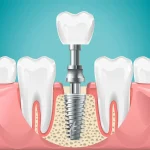




Quick Answer: A dental post is placed after root canal treatment when a tooth has lost too much natural structure to hold a crown on its own. The post does not strengthen the tooth — it anchors the core material that rebuilds the missing coronal portion so the final crown has a stable foundation. Whether you need one depends on how much tooth structure remains, the tooth’s location, and the type of final restoration planned. This post explains what a dental post is, when placement is recommended, the types available, and what the procedure involves. It is written for patients in Brampton and Ontario who are preparing for a root canal or have recently completed one and want to understand what comes next.
Key Takeaways
- A dental post is placed inside the root canal to retain core material when too little natural tooth structure remains above the gumline.
- A post does not strengthen the tooth or root — its sole function is retention.
- The most common reason a post is needed is extensive decay, trauma, or a large broken filling that has destroyed more than half of the visible crown.
- Post and core treatment is typically followed by a dental crown to protect the restored tooth.
- Fibre posts are the most commonly recommended type in modern dental practice.
- Custom cast metal posts are reserved for complex anatomical cases.
- Not every root canal-treated tooth needs a post — molars with sufficient remaining structure often do not.
- At least 4 mm of gutta-percha must remain at the root tip to maintain the apical seal.
What Is a Dental Post?
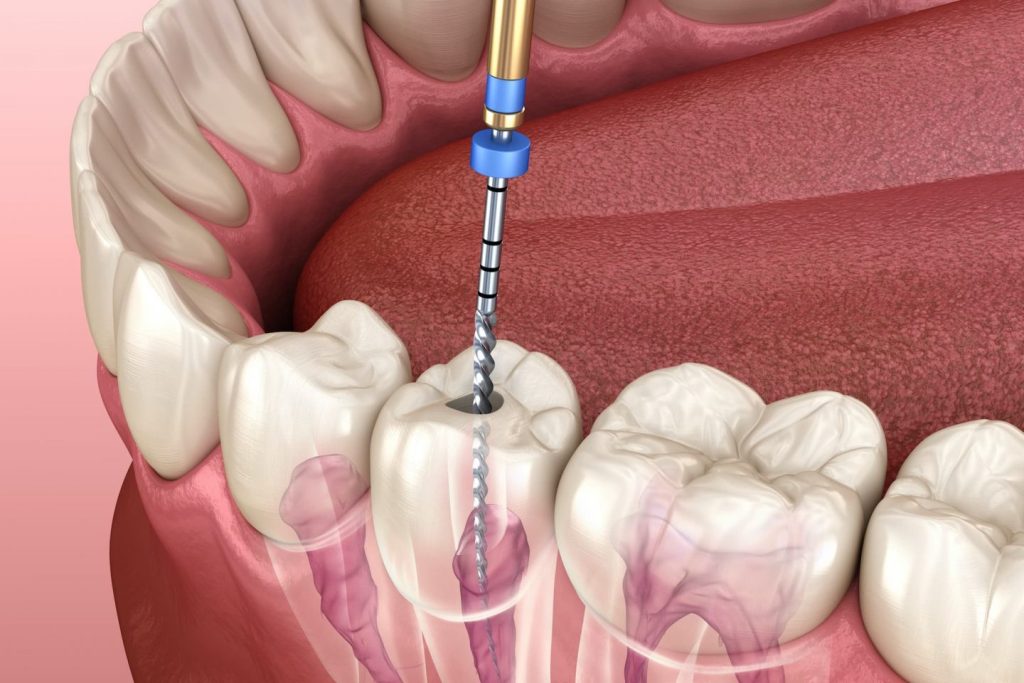
A dental post is a small, slender rod inserted into the root canal of a tooth after endodontic treatment is complete. The canal is cleaned and shaped during root canal treatment, and once the infection is resolved, the canal space is sealed with a material called gutta-percha. When a crown is needed but insufficient tooth structure remains to anchor it, the dentist removes a portion of the gutta-percha from the upper part of the canal and places a post in that space.
The post is then surrounded by core material — typically composite resin — which replaces the missing coronal portion of the tooth. This rebuilt core provides the shape and volume a dental crown is seated over. The post, core, and crown together restore the tooth’s function.
Why a Tooth May Need a Post After Root Canal Treatment
The most common reason a post is indicated following root canal treatment is significant loss of coronal tooth structure. When more than half of the visible crown has been destroyed — by deep cavity decay, trauma, or a large broken filling — a core build-up alone does not have enough natural tooth structure to bond to and grip. The post anchors inside the root canal space to hold the core material in place, giving the final crown a stable foundation.
A post and core is not indicated in every case. Molars often retain sufficient structure to support a core directly, because they have multiple cusps and broader coronal anatomy. The need for a post is assessed on a case-by-case basis, depending on how much healthy tooth remains after the root canal procedure is complete.
Does a Post Strengthen the Tooth?
No. This is one of the most important points to understand. A post does not strengthen the tooth or the root — its function is retention. Patients sometimes expect a post to reinforce the root canal-treated tooth, but that is not what it does.
Excessive preparation of the post space can actually weaken the tooth structure and raise the risk of root fracture. Per endodontic guidelines, adequate dentin thickness must be preserved during post space preparation — the standard requires a ferrule of at least 2 mm height with 1 mm of remaining dentin thickness around the post. Removing too much dentin during preparation increases the chance of fracture, which is why careful evaluation of remaining dentin is part of every post and core decision.
Types of Dental Posts
Prefabricated Posts
Prefabricated posts come in standardized sizes for typical root canal preparations. Because they are manufactured in advance, placement is straightforward and can be completed in a single visit.
Fibre Posts
Fibre-reinforced composite posts — commonly called fibre posts — are the most widely recommended type in modern dentistry. Glass fibre posts bond well to both the root canal system and composite core material, resist high stress without fracturing, and are easier to retrieve than metal or zirconia posts if future retreatment is needed. For front teeth, fibre posts offer better aesthetics, as they do not create a dark shadow visible through tooth-coloured restorations. Glass fibre posts are preferred over carbon fibre alternatives, which can produce dark shadows and unaesthetic results.
Metal Posts
Metal posts have good corrosion resistance and high yield strength. They were the standard for many years and remain in clinical use, though their rigidity can transmit more stress to the root compared to fibre posts — a consideration when selecting a post for a specific tooth and restoration.
Cast Metal Posts
Cast metal posts — also called custom cast posts — are fabricated in a dental laboratory from an impression of the prepared canal space. They are used when irregular anatomy prevents a standard prefabricated post from seating correctly. The cast post and core are created as a single unit and cemented in place, requiring at least two visits with a temporary restoration in between.
Zirconia and Ceramic Posts
Zirconia posts are tooth-coloured and high-strength, but brittle and difficult to remove if retreatment is needed. Post selection balances mechanical performance, biological compatibility, and aesthetic requirements — and determines the cement protocol used to bond the post within the canal.
How a Post and Core Is Placed
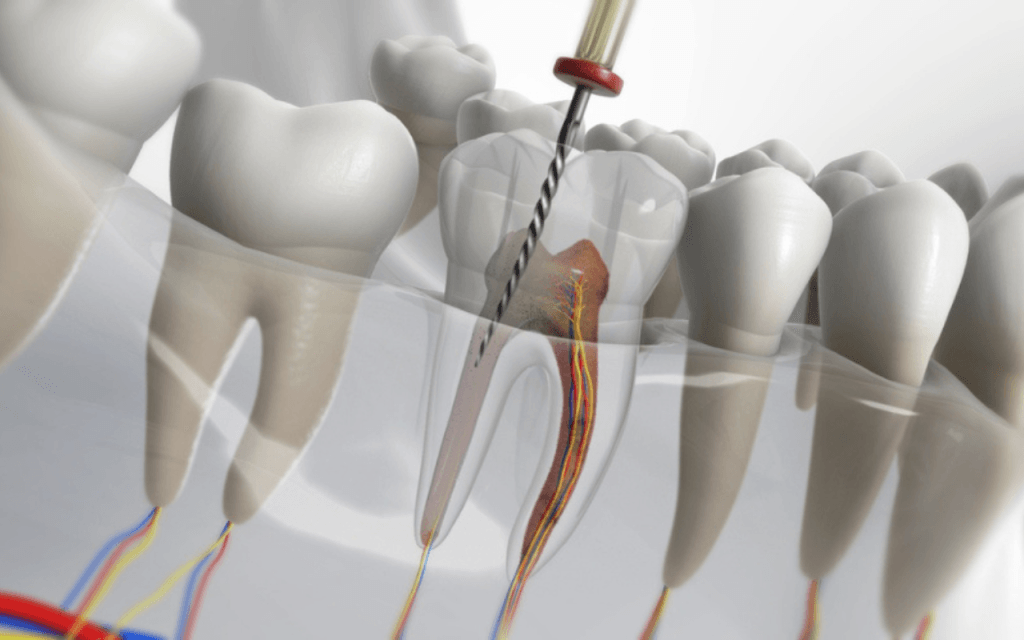
After root canal treatment is complete, the dentist evaluates the remaining tooth structure to determine whether a post is needed. If it is, the following process applies:
- A portion of the gutta-percha filling is removed from the upper part of the canal to create the post space.
- The post is fitted to the prepared space and cemented using an appropriate bonding agent.
- Core material — usually composite resin — is built around the post to restore the coronal portion of the tooth.
- The core is shaped to receive the final crown.
- If a custom crown is being fabricated by a dental laboratory, an impression is taken at this appointment.
Per established endodontic protocol, at least 4 mm of gutta-percha must remain at the root tip to maintain the apical seal from the original root canal filling. Overly aggressive post space preparation can weaken the root or cause perforation of the root wall, which is why careful technique at this stage is essential.
When a Post Is Not Necessary
Not all root canal-treated teeth need a post. When adequate tooth structure remains after root canal treatment — particularly in multi-rooted teeth like molars — composite core material can be bonded directly to the remaining tooth structure without additional retention. Many molars retain their core without a post because their multiple roots and broader coronal anatomy provide enough surface for a durable core build-up.
A post is also avoided when the root canal is curved or narrow, since post space preparation in those situations raises the risk of perforation or fracture. Crown lengthening may be considered as an alternative to expose more natural tooth structure before a post and core decision is made.
Frequently Asked Questions
What is a dental post?
A dental post is a small rod cemented inside the root canal after root canal treatment. It retains the core material that rebuilds the missing coronal portion of a tooth when insufficient natural structure remains to support a crown directly.
What is a post and core?
A post and core is a two-part restoration. The post is cemented into the prepared root canal space. The core is built around the post using composite or another core material, restoring the shape and volume of the tooth so a final crown can be placed over it.
What are fibre posts?
Fibre posts are prefabricated posts made from fibre-reinforced composite material. They are the most commonly recommended type in modern dental practice — they bond well to the canal, are easier to retrieve than metal or zirconia posts if retreatment is needed, and offer better aesthetics for anterior teeth.
What are metal posts?
Metal posts are prefabricated posts made from alloys with good corrosion resistance and high strength. They were widely used for decades and remain in clinical use, though fibre posts have largely replaced them as the first-line choice for most cases.
What are cast metal posts?
Cast metal posts are custom-fabricated restorations made in a dental laboratory from an impression of the prepared canal. They are used when standard prefabricated posts cannot fit due to irregular or unusual root canal anatomy.
Do endodontically treated teeth always need a post?
No. A post is placed only when insufficient tooth structure remains to retain a core build-up. Many root canal-treated teeth — particularly molars with adequate remaining coronal structure — do not require a post before crown placement.
What are core procedures and core restorations?
Core procedures refer to rebuilding the missing coronal portion of a tooth after root canal treatment. Core restorations — typically using composite resin — restore the shape and volume of the tooth so it can support a crown. The post, when needed, is what gives the core material something to anchor to inside the canal.
What is root canal treatment?
Root canal treatment removes infected or damaged pulp tissue from inside the tooth. The canal is cleaned, shaped, and sealed to prevent further infection. When significant coronal structure is lost as part of the decay or damage that led to the infection, a post and core may be needed as the next step before a crown is placed.
Book a Root Canal Consultation in Brampton
Delta Park Dental at 215 Delta Park Blvd Unit 104, Brampton, ON provides root canal treatment, post and core restorations, and crown placement. If you have questions about whether you need a dental post after your root canal, the team can review your X-rays and remaining tooth structure at your appointment. Call 905-494-0094 or email info@deltaparkdental.com to book.
Every smile is different. For accurate information and personalized treatment options,
book a consultation with the team at Delta Park Dental.
Hours: Mon: 10:00 am – 4:00 pm | Tue–Sat: 10:00 am – 6:00 pm