
The information on this page is for general educational purposes only.
Please consult your dentist for advice specific to your oral health.
Key Takeaways
✔ Eat only soft foods for the first week after dental implant surgery
✔ Avoid hard, crunchy, hot, and sticky foods during the healing process
✔ Full normal eating resumes after osseointegration — typically three to six months
✔ Once healed, dental implants function like natural teeth for chewing
✔ Proper care including regular brushing and dental checkups ensures long term success
Introduction
Yes — you can eat normally after dental implants in Brampton, but not immediately. The timeline depends on where you are in the healing process. Directly after implant surgery, soft foods only. After osseointegration — the period when the implant fuses with the jawbone — you can eat virtually anything your natural teeth could handle. Dental implants function like natural teeth for chewing once fully healed. This guide tells you exactly what to eat at each stage, what to avoid, and when normal eating safely resumes.
Delta Park Dental is a Brampton dental office offering dental implant placement with experienced team support at every stage. We guide patients through eating, recovery, and long term implant care from the first consultation through to final crown placement.
What Is a Dental Implant and How Does It Work?
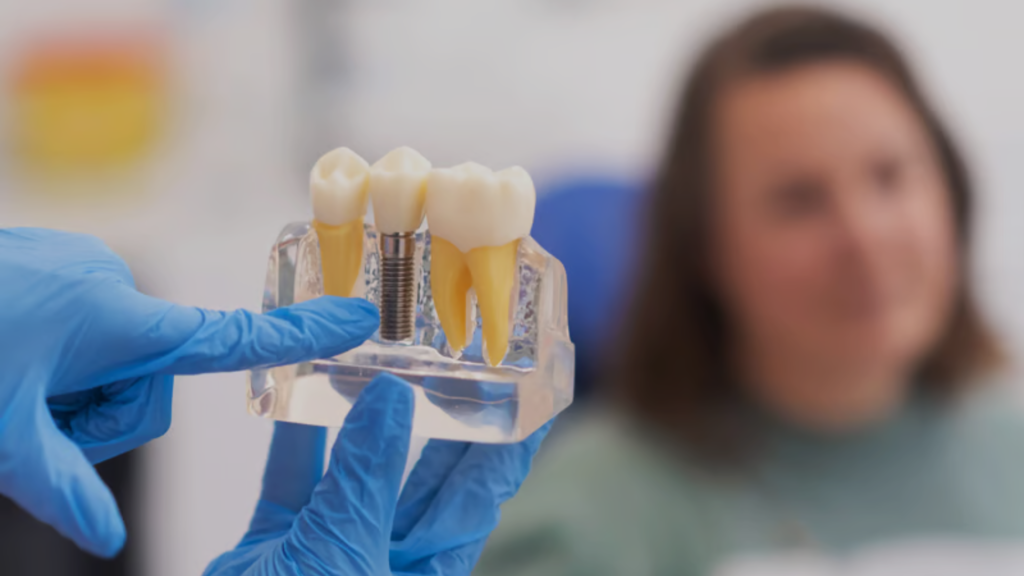
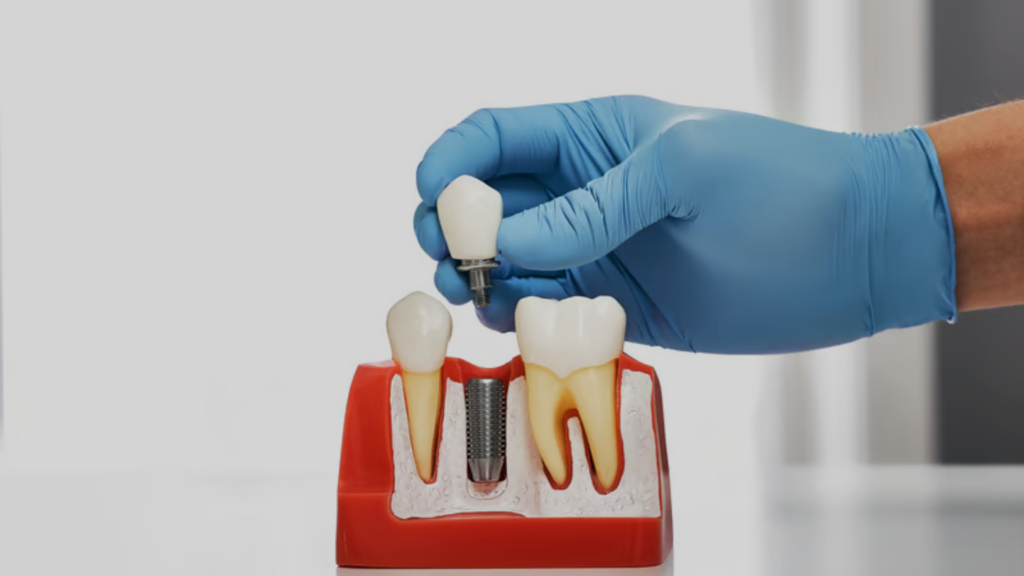
A dental implant is a titanium post placed surgically into the jawbone to replace a missing tooth root. The dental implant involves placing a metal implant post into the jawbone, waiting for osseointegration, then attaching a dental restoration — a crown — to create replacement teeth with a natural look, feel, and function identical to natural teeth.
Osseointegration takes three to six months to complete. During this healing time, the implant system fuses with the jawbone through new bone growth around the metal post. This is what makes dental implants the most stable tooth replacement option available — they stimulate the jawbone, preventing deterioration and facial sagging following tooth loss. Implant dentistry replaces lost teeth — whether one tooth or several teeth — without altering surrounding teeth, unlike a dental bridge.
Can You Eat Normally Right After Dental Implant Surgery?
No — not immediately. Dental implant surgery is a minor surgery for most patients — classified as a surgical procedure — and the healing process requires careful attention to what you eat. Directly after implant surgery, the gum tissue is healing around the metal post. Eating the wrong foods can cause implant failure or slow the healing process significantly.
What to eat in the first 24 to 48 hours:
• Cold or room-temperature foods only — heat increases swelling
• Soft foods: yogurt, smoothies, mashed potatoes, scrambled eggs, cooled soup
• Avoid hard, crunchy, chewy, or spicy foods entirely
• Do not use a straw — suction pressure can disturb the surgical site
What Can You Eat in the First Week After Implant Surgery?
The first week after dental implant placement is critical. Stick to soft foods requiring minimal chewing pressure on the treated side.
Good choices during the first week:
• Soft fruits: banana, avocado, melon
• Cooked vegetables: steamed carrots, soft sweet potato
• Eggs: scrambled, poached, or soft-boiled
• Dairy: yogurt, cottage cheese, soft cheese
• Protein: soft fish, tofu, slow-cooked tender meat
• Grains: oatmeal, soft pasta, white rice
Avoid during the first week:
• Hard foods: raw carrots, apples, crusty bread, nuts
• Sticky foods: caramel, chewing gum, dried fruit
• Crunchy snacks: chips, popcorn, crackers
• Alcohol and smoking — both impair healing and increase implant failure risk
When Can You Return to Normal Eating After Dental Implants?
Most patients can gradually return to a normal diet two to four weeks after dental implant surgery — once the gum tissue has healed over the implant site. However, full normal eating is not recommended until osseointegration is complete.
Osseointegration takes three to six months. During this healing time, a temporary crown may be in place. Avoid biting hard foods directly on the temporary crown — it is not designed for the same pressure as the final restoration.
Once the permanent crown is placed and the dentist confirms the implant is working properly, you can eat normally. Most patients find that dental implants provide support for surrounding teeth and other teeth by preventing bone loss. Eating with implants feels identical to eating with natural teeth. The process typically requires several visits across the treatment period.
What Foods Should You Permanently Avoid With Dental Implants?
Once fully healed, dental implants allow you to eat the vast majority of foods. There are no permanent dietary restrictions comparable to dentures. However, a few habits protect long term success:
• Avoid biting very hard objects: ice, hard candy, and bottle caps can crack the implant crown
• Limit excessively sticky foods that put prolonged pressure on the crown
• Maintain healthy gum tissue — gum health is important for long-term implant success
• Avoid smoking — smoking may contribute to dental implant failure over time
How Does Eating Compare — Dental Implants vs Dentures?
Choosing dental implants over dentures significantly changes the eating experience. Dentures can slip during chewing, restrict diet, and cause bone loss. Dental implants prevent jawbone shrinkage after tooth loss — they are fixed permanently and require no adhesives. Most dental implants have a high success rate over many years. They significantly improve overall health, quality of life, and eating confidence for patients replacing missing teeth.
What Most Patients Get Wrong About Eating After Implants
“I can eat normally as soon as the numbness wears off.”
Local anesthesia wearing off does not signal that the implant site is healed. Eating hard or crunchy foods within the first week risks disturbing the surgical site and can contribute to implant failure.
“Soft foods means hot soup is fine.”
Hot foods increase blood flow to the surgical site, causing swelling. During the first 24 to 48 hours, all food and drinks should be cool or room temperature — not hot.
“Once the crown is fitted I can eat anything immediately.”
The permanent crown restores full function — but surrounding gum tissue and jaw bone need time to fully adapt. Your dentist in Brampton will confirm when all foods are safe without restriction.
Does Diet Affect Long Term Implant Success?
Yes. Maintaining good oral care and eating habits protects the implant system long term. Dental implants require regular brushing, flossing, and dental examinations for ongoing care. A diet rich in calcium and vitamins supports bone health — the jawbone that provides support for the implant post.
According to the American Dental Association (ada.org) and the American College of Prosthodontists (acponline.org), candidates for dental implants should have enough bone and healthy gums. Maintaining those conditions after placement protects the implant long term. Your dentist confirms whether you are a good candidate during the initial consultation. Patients with medical history factors such as diabetes should follow specific advice from their dental team and maxillofacial surgeon.
When to Contact Your Brampton Dental Office After Implant Surgery
Contact your dental office promptly if you notice: pain beyond 72 hours, visible swelling or pus, the temporary crown loosening, or difficulty eating soft foods due to pain.
These may indicate a complication with healing or osseointegration. Early contact with your dental team prevents minor issues from becoming implant failure.
Why Choose Delta Park Dental for Dental Implants in Brampton?
Delta Park Dental is a Brampton dental office offering full dental implant procedure support — from consultation through to permanent crown placement.
• Dental implant placement including bone grafting when the jawbone is insufficient
• Dental implants placed under local anesthesia — general anesthesia available for complex cases
• Coordination with oral surgeons, dental specialists, and oral and maxillofacial surgeon for complex implant cases requiring specialist referral
• Implant system selection tailored to your bone structure and medical history
• Temporary and permanent crown fitted in-office
• Dietary and care guidance at every stage — from implant surgery through full recovery
• CDCP and most insurance plans accepted with direct billing
Dental implant surgery is generally not covered by OHIP in Ontario. Dental implants can cost between $3,000 and $4,500 each, with bone grafting increasing total cost. Insurance may cover part of the cost — confirm with your provider. (Prices vary — confirm with our office before treatment)
Book a consultation at our Brampton dental office today. Our experienced team helps you determine whether you are a good candidate, discusses the dental implant procedure, and builds a plan around your oral health and smile goals.
Frequently Asked Questions: Eating After Dental Implants in Brampton
Q1. How soon can I eat normally after dental implants in Brampton?
Most patients can eat soft foods within a few hours of dental implant surgery once local anesthesia wears off. A gradual return to normal foods begins around two to four weeks as gum tissue heals. Full normal eating resumes after osseointegration is confirmed — typically three to six months. Your dentist in Brampton will confirm the timeline at each follow-up visit based on how the implant system is healing.
Q2. What foods should I avoid after dental implant surgery?
Avoid hard, crunchy, sticky, and hot foods for the first week after dental implant surgery. Do not use a straw — suction can disturb the surgical site. Avoid alcohol and smoking, both of which impair healing and increase implant failure risk. Eat soft foods like yogurt, eggs, and cooled soup during recovery. Your Brampton dental office will provide specific dietary guidance based on your implant procedure and healing progress.
Q3. Does bone grafting affect how long I wait before eating normally?
Yes. Bone grafting adds time to the overall healing process. If bone grafting is needed before dental implant placement due to insufficient jawbone, the graft must heal before the implant post is placed. This extends the timeline by several months. During this period, dietary restrictions remain in place to protect the graft site. Your dental team will provide a revised eating timeline based on your specific bone grafting and dental implant procedure.
Q4. Are dental implants better than dentures for eating?
Yes — dental implants significantly improve the eating experience compared to dentures. Dental implants function like natural teeth for chewing, require no adhesives, and allow patients to eat foods that denture wearers often avoid. Dental implants also prevent jawbone shrinkage after tooth loss, which dentures do not. Most dental implants have a high success rate over many years, making them the preferred long-term tooth replacement solution for replacing missing teeth.
Q5. What dental care do implants need long term?
Dental implants require regular brushing, flossing, and dental examinations — the same dental care as natural teeth. Visit your dental office every six months for professional cleanings. Avoid biting very hard objects that can crack the crown. Maintain good gum health — gum disease is a leading cause of implant failure. Smoking significantly increases the risk of long-term implant problems. With proper care, dental implants can last decades or a lifetime.
To book an appointment: call +1 905-494-0094, visit deltaparkdental.com/contact-us, or come to 215 Delta Park Blvd Unit 104, Brampton ON L6T 0H9. Hours: Mon 10am-4pm | Tue-Sun 10am-6pm.
Delta Park Dental | Brampton, Ontario | Family, Cosmetic & Emergency Dentistry
Every smile is different. For accurate information and personalized treatment options,
book a consultation with the team at Delta Park Dental.