




Quick Answer: Dental implant surgery is far less painful during the procedure than most patients expect. Local anesthesia blocks sharp sensations at the surgical site, so the experience is typically one of pressure and vibration rather than pain. Post-operative discomfort — swelling and soreness — peaks within 2 to 3 days and usually resolves within one to two weeks. The deeper healing, where the implant fuses to the jawbone, unfolds quietly over several months. This post explains what dental implant surgery feels like, what recovery looks like week by week, and when bone grafting may extend the timeline. It is written for patients in Brampton and Ontario who are considering dental implants and want an honest account before booking a consultation.
Key Takeaways
- Dental implant surgery is performed under local anesthesia. Most patients feel pressure rather than sharp pain during the procedure.
- Post-operative discomfort typically peaks within 2 to 3 days and resolves within one to two weeks.
- Sedation manages anxiety and awareness — it does not replace local anesthesia or prevent post-operative discomfort.
- Most patients return to normal activities within one to three days of implant surgery.
- Osseointegration — the process by which the implant fuses to the jawbone — takes several months.
- Bone grafting may be needed if the jawbone lacks sufficient volume, adding several months to the timeline.
- Dental implants are titanium artificial roots that can last many years or a lifetime with proper care.
- Risks include infection, nerve damage, and sinus complications, though these are uncommon with experienced clinicians.

What Dental Implant Surgery Actually Feels Like
The physical reality of dental implant surgery is consistently less painful than patients anticipate. Local anesthesia blocks the sharp sensations at the implant site effectively. During placement, most patients describe the experience as firm pressure and vibration — not pain.
A single dental implant procedure typically takes 30 to 60 minutes. The sensation during drilling and implant placement is mechanical in character. Patients who expect sharp or severe pain are usually surprised by how manageable the procedure is in the chair.
True discomfort begins afterward, once the anesthesia wears off. Swelling and soreness in the gum tissue and surrounding jaw typically appear in the first 24 to 48 hours. Discomfort peaks within 2 to 3 days, then gradually decreases. Mild tenderness may persist for up to two weeks.
Does Sedation Help with Dental Implant Surgery?
Sedation is available for patients with significant dental anxiety, and it does help — but understanding what sedation does and does not do matters before choosing it.
Sedation manages anxiety, awareness, and the stress response during the procedure. It does not replace local anesthesia. Local anesthesia (such as lidocaine) is still administered at the surgical site to block pain signals directly — sedation alone does not numb the jaw. A patient who chooses sedation will still receive local anesthesia and will likely feel very little of either, but the two work differently and serve different purposes.
Sedation also cannot prevent post-operative discomfort. Swelling and soreness after implant surgery occur during the healing process regardless of what sedation was used during the procedure. For patients whose primary concern is post-surgical pain rather than in-chair anxiety, sedation does not change that aspect of recovery.
The Recovery Process After Implant Surgery
Days 1 to 3
Swelling and soreness are most prominent during this window. An ice pack applied to the face in 20-minute intervals during the first 24 hours helps manage swelling. Patients should rinse gently with warm salt water starting the day after surgery — not vigorously, to protect the surgical site. Soft foods such as mashed potatoes and other easy-to-chew options are recommended for the first week. Most patients return to work within one to three days.
Days 4 to 14
Swelling begins to subside. Soreness continues to decrease. Patients continue eating soft foods and avoiding pressure on the implant site. By the end of the second week, most patients experience only mild residual tenderness. The soft tissue around the implant site continues to heal.
Osseointegration
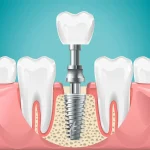
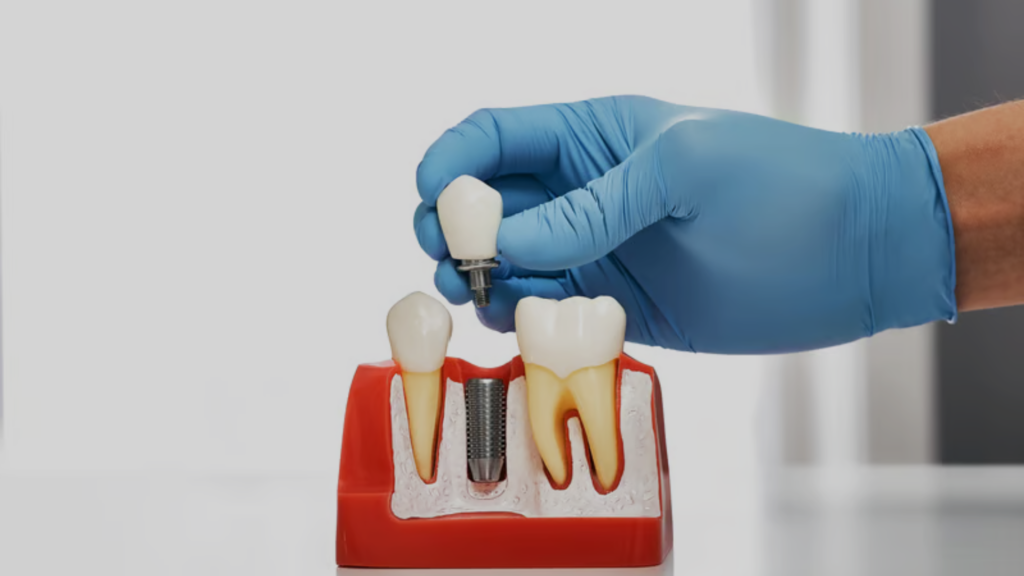
This is the phase most patients do not see or feel, but it is the most significant. Osseointegration is the process by which the titanium implant fuses to the surrounding jawbone. This takes several months depending on bone density, the patient’s health, and the location of the implant. Once osseointegration is confirmed, the abutment — the connector piece — is placed, followed by the final artificial tooth (crown).
For more detail on healing timelines and what to expect as the implant integrates, see: How Long Does It Take for Dental Implants to Heal?
Bone Grafting and What It Adds to the Timeline
Bone grafting is needed when the jawbone lacks sufficient volume or density to support an implant. If the jaw is too soft or thin, the implant does not have a stable foundation to fuse to.
Bone grafting can use natural bone material or synthetic substitutes to build up the implant site. Minor grafting can sometimes be performed at the same time as implant surgery. More significant grafting requires a separate procedure followed by several months of healing before the implant can be placed.
For patients who need bone grafting, the total treatment timeline is extended — the graft must be stable and integrated before implant placement proceeds.
What Are Dental Implants?
Dental implants are artificial roots made of titanium that are placed in the jawbone to replace a missing tooth or several teeth. Because titanium is biocompatible, the implant fuses with the surrounding bone during osseointegration and functions as a stable anchor for the final restoration.
Unlike a dental bridge, implants do not require enamel removal from neighboring teeth. They help prevent the bone loss and facial sagging that typically follow tooth loss. Dental implants look and act like natural teeth and, with proper care, can last many years or a lifetime.
Frequently Asked Questions
Do dental implants hurt?
The procedure itself is managed with local anesthesia and is not typically painful. Post-operative soreness and swelling begin after the anesthesia wears off and peak within 2 to 3 days. Most patients manage this with over-the-counter pain relief and ice.
What is the dental implant procedure?
The dental implant procedure involves placing a titanium artificial root into the jawbone, allowing it to fuse to the bone over several months (osseointegration), then attaching an abutment and final artificial tooth. The process typically involves multiple visits over several months.
What is bone grafting?
Bone grafting adds bone material to the jaw to build up areas that are too thin or soft to support an implant. Minor grafting can occur at the same appointment as implant surgery; more significant grafting requires a separate procedure and healing period before the implant is placed.
What should I eat after implant surgery?
Soft foods are recommended for the first week. Mashed potatoes, yogurt, and similar options reduce pressure on the implant site while soft tissue heals. Hard, crunchy, or chewy foods should be avoided until the dentist confirms the site has healed adequately. For a full guide on returning to your regular diet after implants, see: Can I Eat Normally After Dental Implants?
What is the recovery process for a missing tooth replaced with an implant?
Soft tissue healing takes one to two weeks. Osseointegration — where the implant fuses to the jawbone — takes several months. During this period, patients resume normal activities but avoid undue pressure on the implant site. The final artificial tooth is placed once osseointegration is confirmed.
What are the risks of implant surgery?
Risks include infection at the implant site, nerve damage, and sinus complications for implants in the upper jaw. These complications are uncommon when surgery is performed by an experienced clinician with appropriate imaging. Regular follow-up visits are important for monitoring healing and implant success.
Book a Dental Implant Consultation in Brampton
Delta Park Dental at 215 Delta Park Blvd Unit 104, Brampton, ON offers dental implant consultations. The team can assess your bone volume, review your medical history, and walk you through the full treatment timeline before any procedure begins. Call 905-494-0094 or email info@deltaparkdental.com to book your appointment.
Every smile is different. For accurate information and personalized treatment options,
book a consultation with the team at Delta Park Dental.
Hours: Mon: 10:00 am – 4:00 pm | Tue–Sat: 10:00 am – 6:00 pm