





The information on this page is for general educational purposes only.
Please consult your dentist for advice specific to your oral health.
Key Takeaways
✔ Do not use a straw, smoke, or rinse forcefully for at least the first week — these dislodge the blood clot
✔ Eat soft foods for the first three to five days — hard foods risk dry socket and delayed healing
✔ Pain and swelling peak around day three or four — this is normal
✔ Dry socket is the most common complication — contact your dental clinic immediately if pain worsens after day three
✔ Full tissue healing takes about two weeks; follow aftercare instructions exactly throughout
Introduction
After wisdom tooth removal, what you do in the first week determines whether you heal smoothly or develop a complication. Most patients recover in five to seven days with no serious issues. But dry socket, infection, and delayed healing are all avoidable — and almost always linked to not following aftercare instructions. This guide covers everything to do and avoid after wisdom teeth removed — what the first week looks like, what dry socket is, and how to heal as fast as possible.
Delta Park Dental supports patients through every stage of wisdom tooth removal — from detailed pre-discharge aftercare instructions to same-day contact for post-extraction complications. Call +1 905-494-0094 with any concerns during recovery.
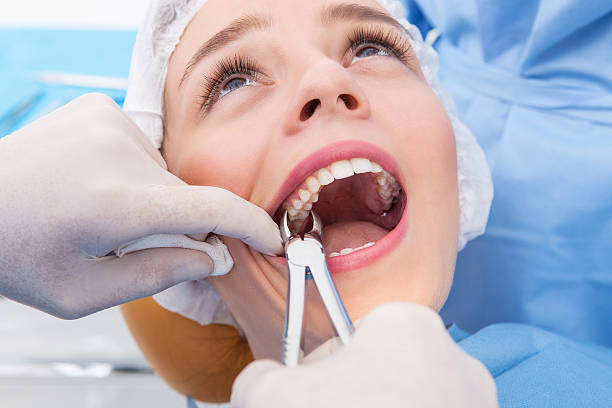
What to Expect After Wisdom Tooth Removal
Recovery from wisdom tooth removal — whether simple or surgical extraction of third molars — typically takes five to seven days. How many wisdom teeth were removed, whether partial eruption was involved, and whether there was enough room and enough space in the jaw all affect healing time.
Normal symptoms in the first 72 hours:
• Mild to moderate swelling around the jaw and cheeks
• Minor bleeding that slows and stops within a few hours of leaving the dental clinic. If significant bleeding continues beyond three hours, contact your dental clinic. Same day emergency appointments and same day appointments are available for dental emergency situations
• Dental discomfort and soreness at the surgical site
• Numbness or tingling as local anesthesia or general anesthesia wears off
• A bad taste near the extraction site during the first day — normal as the blood clot forms
Blood clots form in extraction sites during the first 24 hours after surgery. This clot is the foundation of healing — protecting the surrounding bone and nerve endings beneath. Dislodging it is the primary cause of dry socket.
Impacted wisdom tooth removal is common among young adults in their late teens and twenties — earlier removal generally means easier removal and shorter healing time. Stitches may dissolve on their own or require removal at a follow-up appointment. Deeply impacted wisdom teeth cases where there was not enough space or room for eruption may require more complex stitching.
The Dos After Wisdom Tooth Removal
Do Follow Your Dentist’s Instructions Exactly
Detailed aftercare instructions from your dentist or oral surgeon are the single most important factor in your recovery. Professional care after the procedure is as important as the extraction itself. Read your dentist’s instructions fully before leaving the dental clinic and follow them even when you feel better than expected — healing is happening beneath the gum tissue whether or not you feel pain.
Do Bite on Gauze to Control Bleeding
Bite gently but firmly on the gauze pad placed over the surgical site. Change every 30 to 45 minutes until bleeding slows significantly. Minor bleeding for the first few hours is normal. Contact your dental clinic if significant bleeding continues beyond three hours.
Do Apply Ice for the First 48 Hours
Apply an ice pack to the outside of the jaw — 20 minutes on, 20 minutes off — for the first 24 to 48 hours. After 48 hours, switch to gentle warmth. A warm compress promotes circulation and supports healing in the later stages of recovery.
Do Eat Soft Foods
Eat soft foods like yogurt, mashed potatoes, scrambled eggs, applesauce, and cooled soup for the first three to five days. Soft foods reduce pressure on the surgical site and protect the blood clot. Most patients can gradually reintroduce normal foods by day five to seven. Avoid seeds, popcorn, and small particles that can lodge in the extraction socket.
Do Rinse Gently With Warm Salt Water
Starting 24 hours after wisdom tooth extraction, rinse gently with warm salt water after meals. Dissolve half a teaspoon of salt in a glass of warm water. Rinse gently — do not swish forcefully. This reduces bacteria around the surgical site, soothes the gums and gum tissue around the molars, and supports healing. Continue two to three times daily through the first week.
Do Take Pain Medication as Directed
Take prescribed medication or over-the-counter ibuprofen as directed on the package. Ibuprofen reduces both pain and inflammation — more effective for dental discomfort and mild discomfort than acetaminophen alone. If pain persists, your dentist may advise taking acetaminophen as well — always follow package directions.
The Don’ts After Wisdom Tooth Removal
Do Not Use a Straw
Suction from a straw creates negative pressure in the mouth that can dislodge the blood clot from the surgical site. This causes dry socket — the most common complication after wisdom tooth removal. Avoid straws for at least the first week, not just the first 24 hours.
Do Not Smoke or Use Tobacco Products
Smoking reduces blood flow to the surgical site, introduces bacteria, and is the leading cause of dry socket. Even a single cigarette in the first 48 hours substantially increases complication risk. If temporarily quitting is difficult, discuss options with your dentist or oral surgeon before the procedure.
Do Not Eat Hard Foods
Do not eat hard, crunchy, chewy, or sticky foods for the first three to five days. Foods requiring significant bite pressure disturb the surgical site and risk dislodging the blood clot. Avoid anything that could leave particles in the socket.
Do Not Rinse Forcefully in the First 24 Hours
Avoid vigorous rinsing for the first 24 hours after extraction. Forceful rinsing, spitting, or gargling dislodges the clot. After 24 hours, rinse only gently. Do not use commercial mouthwash aggressively during the first week.
Do Not Ignore Warning Signs
Contact your dental clinic same day if: severe pain worsens after day three, swelling spreads to the neck, fever develops, you notice pus or a persistent bad taste, or you have difficulty opening your mouth beyond the first day.
Infections can spread quickly after impacted wisdom teeth removal. Do not wait longer than 24 hours if these symptoms appear — early contact prevents long term complications. The Canadian Dental Association (cda-adc.ca) notes that most wisdom tooth complications after extraction are avoidable with proper post-operative care.
What Is Dry Socket — Symptoms, Timeline, and Treatment
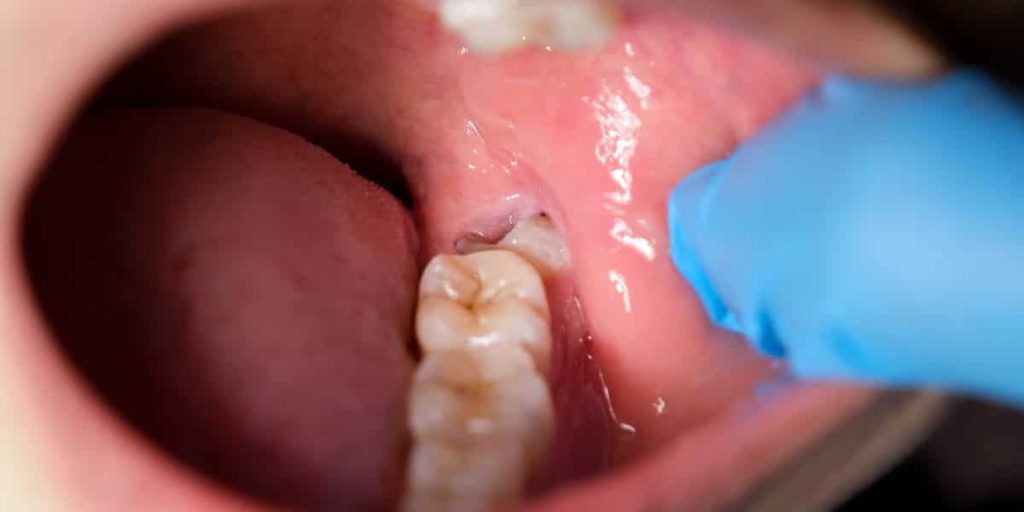
Dry socket occurs when the blood clot that forms after extraction is dislodged or dissolves before the wound heals. It is the most common complication after wisdom tooth removal and causes significant pain — typically starting two to four days post-surgery, often after a period of apparent improvement.
Symptoms
• Severe pain that escalates rather than improving after the first few days
• Visible empty socket — the dark clot is gone, exposing pale bone
• A bad taste in the mouth that does not resolve
• Pain radiating from the socket to the ear or jaw
Who Is Most at Risk
• Patients with deeply impacted wisdom teeth — complex extractions where there was not enough space or enough room for eruption carry higher dry socket risk
• A fluid filled sac or cyst present before extraction increases healing complexity
• Smokers — smoking is the primary risk factor
• Patients who used a straw or rinsed too forcefully too soon
Treatment
Contact your dental clinic immediately — dry socket is treated by cleaning the site and placing a medicated dressing. This provides fast relief, typically within hours. Do not attempt to treat dry socket at home.
Day-by-Day Recovery Timeline
1. Day 1: Bite on gauze, apply ice, eat soft foods, rest. Do not rinse, spit, or use a straw. Take medication before numbness wears off
2. Days 2–3: Continue ice if swelling is active. Begin gentle warm salt water rinses 24 hours post-extraction. Soft diet continues. Some patients notice worst swelling on day two or three — this is normal
3. Days 3–4: Pain and swelling peak, then begin to improve. If pain is worsening at this point rather than improving, contact your dental clinic — this pattern may indicate dry socket
4. Days 5–7: Most patients are largely comfortable and can resume most normal activities. Avoid hard or crunchy foods until the socket is more fully healed
5. Week 2: Gum tissue continues to close. A follow-up appointment may occur. Most patients feel fully normal
6. Two weeks: Complete tissue healing is largely achieved. Surrounding bone remodelling continues for several months
What Most Patients Get Wrong After Wisdom Tooth Removal
“I feel fine — I can eat normally.”
Feeling better than expected does not mean the blood clot is secure. The first 72 hours are the most critical window. Eating hard foods or using a straw before the end of the first week — even once — is the most common cause of dry socket and a significant setback to recovery.
“I should rinse constantly to keep it clean.”
Over-rinsing or rinsing too soon is one of the most common causes of dry socket. Wait 24 hours before any rinsing, then rinse gently twice to three times daily after meals. More frequent rinsing does not accelerate healing and directly risks dislodging the clot.
“Swelling worse on day three means something is serious.”
Pain and swelling peak on day three or four as the normal inflammatory process resolves. This is expected. Concern is appropriate only if swelling continues beyond day four, spreads to the neck or eye area, or is accompanied by fever.
Why Choose Delta Park Dental for Wisdom Tooth Aftercare in Brampton?
Delta Park Dental supports patients through every stage of wisdom tooth removal in Brampton.
• Detailed aftercare instructions tailored to your extraction type before you leave the clinic
• Follow-up appointments to confirm healing is progressing correctly
• Same-day contact for patients experiencing pain, swelling, or dry socket symptoms post-extraction
• Local anesthesia, laughing gas, and sedation so patients feel calm during the procedure
• Coordination with oral surgeons and maxillofacial surgeons for complex surgical extraction cases
• Direct billing to most dental insurance plans — most plans cover part of wisdom tooth removal costs
Call us at +1 905-494-0094 or book online at deltaparkdental.com/contact-us. We are located at 215 Delta Park Blvd Unit 104, Brampton ON L6T 0H9. Hours: Mon 10am–4pm | Tue–Sun 10am–6pm.

Frequently Asked Questions: After Wisdom Tooth Removal
Q1. What are the most important dos and don’ts after wisdom tooth removal?
Do follow your aftercare instructions exactly, apply ice for the first 48 hours, eat soft foods, and rinse gently with warm salt water starting 24 hours post-extraction. Do not use a straw, smoke, or eat hard foods for at least the first week. These steps protect the blood clot that forms at the surgical site and are the most reliable way to prevent dry socket after wisdom tooth removal.
Q2. How long does recovery take after wisdom tooth removal?
Recovery from wisdom tooth removal takes five to seven days for most patients. Pain and swelling peak around day three or four, then improve steadily. Complete tissue healing takes about two weeks. Follow your aftercare instructions — avoiding straws, tobacco products, and hard foods throughout the first week. Contact your dental clinic if pain worsens after day three rather than improving, as this pattern may indicate dry socket.
Q3. What is dry socket and how do I prevent it?
Dry socket occurs when the blood clot is dislodged from the extraction site, exposing bone and nerve endings. It causes severe pain two to four days post-extraction. Prevent it by not smoking, not using a straw, rinsing gently after 24 hours, and following aftercare instructions exactly. If you develop worsening pain, a bad taste, or see an empty socket, contact your dental clinic for fast relief.
Q4. What can I eat after wisdom tooth removal?
Eat soft foods for the first three to five days — yogurt, mashed potatoes, scrambled eggs, applesauce, and cooled soup. Avoid hard, crunchy, chewy, and sticky foods that disturb the surgical site. Reintroduce normal foods gradually from day five to seven. Avoid seeds and popcorn until the socket is fully closed — small particles lodge in the extraction site and cause discomfort.
Q5. When should I contact my dentist after wisdom tooth extraction?
Contact your dental clinic if pain worsens after day three, if swelling spreads to the jaw or neck, if you develop fever, or if you notice a bad taste or visible empty socket. Also contact if stitches feel loose or bleeding does not slow within a few hours. Early contact leads to fast relief — do not wait longer than 24 hours if these symptoms appear.
Delta Park Dental | Brampton, Ontario | Family, Cosmetic & Emergency Dentistry
Every smile is different. For accurate information and personalized treatment options,
book a consultation with the team at Delta Park Dental.